Fortnite's Two Rendering Paths Put Different Demands on PC Hardware
Epic Games uses Fortnite to show where Unreal Engine 5 is headed, while retaining a simplified performance mode for older hardware.

Epic Games uses Fortnite to show where Unreal Engine 5 is headed, while retaining a simplified performance mode for older hardware.
NVIDIA's first Linux driver in the R620 branch improves explicit synchronization performance in high-frame-rate Wayland benchmarks. It also addresses display issues and game crashes.
Bandai Namco Aces says Async Compute may affect stability on some GPU configurations, but its investigation into PC crashes continues.
GeForce/RTX Spark Hotfix 621.12 addresses video playback failures on some RTX 50 Series GPUs and RTX Spark systems after GRD 621.01, along with a separate Unreal Engine 5.8 crash.
Microsoft's Driver Quality Initiative puts hardware vendors on notice. Intel moves first with 26H2-ready GPU drivers aimed at preventing crashes and battery drain.
Nvidia says software tuned for Vera's Olympus cores can lift performance by nearly 39% in a matrix multiplication test. Existing Arm code runs on Vera, but may not fully use its execution resources.
Dated Windows crash records can reveal recurring failures, while separate utilities inspect RAM, hardware activity and crowded drives. Here is what each tool can show and where its diagnostic role ends.
AMD AOCL 6.0 updates several CPU libraries for Zen 6 and introduces AOCL-OpenRNG with 11 base generators and 17 statistical distributions.
A mouse-triggered frame-rate collapse is a reason to test the polling rate first. Check drivers and overlays next; loading freezes and crashes need separate steps.
A Geekbench listing reports strong multi-core results from a 10-core AMD engineering sample, but its listed maximum clock is lower than its base frequency.
Scott Hanselman's open-source gputaskman breaks down GPU activity by process and can show details about local AI models, though some readings depend on the hardware and operating system.
The CPU and system tests ran on an AMD Ryzen 9 9900X3D2 desktop, with kernel and GCC versions varying across the tested installations.
Disabling the page file can leave Windows unable to promise memory to apps or save kernel crash dumps, even when a 32GB PC still has free RAM.
Luumi pushed a Core i5 4670K to 6,301 MHz, ending a 12-year record streak in its Cinebench R11.5 category. The liquid-nitrogen-cooled run scored 10.8 cb on older-generation hardware.
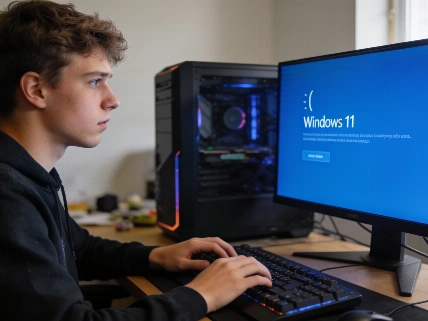
A sudden blue screen tied to BEDaisy.sys can wreck a gaming session on Windows 11 or 10. Here’s how to investigate the crash and address its underlying causes.
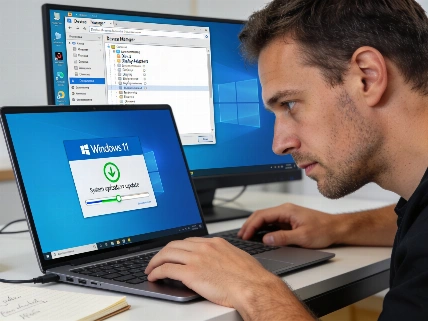
A close look at Windows 11 Event Viewer logs with Claude AI revealed hidden driver failures and misleading crash reports. Simple fixes followed, giving a clearer view of system health.
The Windows 11 26H2 update quietly enables a Low Latency Profile and can reduce memory use on some PCs. Users are reporting snappier performance without a major system overhaul.
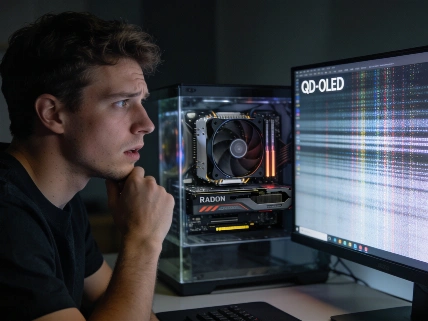
A technical clash between frame generation and hardware GPU scheduling is causing severe flicker and unstable refresh rates for Radeon RX 9070 XT owners using QD-OLED and IPS monitors.
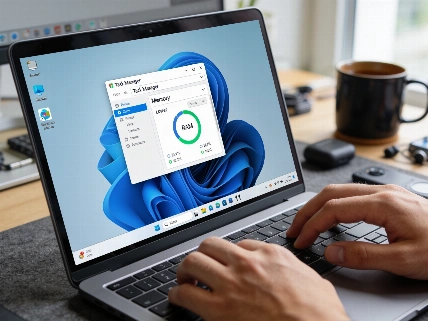
A recent Windows 11 update is delivering a surprise boost in available memory for some users, with reports of up to 3GB less RAM usage after installation.
GeForce RTX 5070 Ti owners are reporting game crashes and freezes with DLSS 5, while overclocking and undervolting adjustments that once worked are failing.
A practical guide to free tools that can keep Windows 7 safe and useful in 2024, while helping an older PC run faster.
Discord is rolling out Game Mode, which automatically dials down its animations to reduce CPU and GPU use while you play. Will it make your system run more smoothly?
The Witcher 3 Wild Hunt Remastered is out on all platforms, but PC gamers are reporting major performance drops and hardware-specific problems, along with visual glitches. Here’s what players are experiencing and which settings may help.