
PC players hit by major problems after The Witcher 3 Wild Hunt Remastered launch
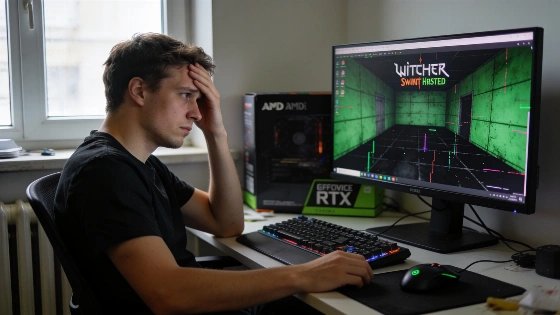
On launch day, PC players jumped into The Witcher 3 Wild Hunt Remastered. Many found trouble instead of smooth gameplay. Reports of stuttering, frame drops, and strange graphics bugs flooded forums. AMD and Intel users took the hardest hit.
The remaster transitioned to native DirectX 12 rendering with multithreading, a change CD Projekt RED described as key to improving both graphics and performance.
Performance isn't the only problem. Some players see eyes and mouths appear before the rest of a character's head. It's jarring. This bug mostly hits older or budget CPUs. The cause is high CPU load. The only workaround is to lower the Number of Background Characters to Medium or Low. Ultra settings? Forget it unless you have a top-tier processor.
Graphics bugs depend on your hardware. NVIDIA users spot green walls in Geralt and Yennefer's room at Kaer Morhen. AMD users see black blocks where shadows should be. These aren't just minor annoyances. They break immersion and point to deeper compatibility issues. Only future drivers or patches will fix them.
In reviews and performance tests as of late September 2026, the demanding path tracing mode was found to be extremely taxing: even on a GeForce RTX 5080, frame rates hovered around 30-35 FPS, and reviewers recommended disabling path tracing for smoother gameplay.
All these problems point to one thing. The Witcher 3 Wild Hunt Remastered is out, but for PC players, the real fight is with their own hardware and drivers. Until AMD and Intel release new drivers, and until CD Projekt Red patches these bugs, a smooth next-gen Witcher experience is out of reach for many. Only those willing to tweak settings and accept visual flaws will get close to stable gameplay. That's the reality right now.
CD Projekt RED told players to install the latest graphics drivers for NVIDIA, AMD, and Intel before launch. Unsupported GPUs fall back to FSR 2 for upscaling. The official forum announcement says AMD Radeon RX 7000 series and newer cards support FSR 4. Older or unsupported GPUs use FSR 2 instead.
The remaster's technical overhaul brought big features: ray tracing, better textures, photo mode, cross-progression, and Ultra+ PC settings. Patch notes for version 4.0 and later updates list these changes. Patches 4.01 through 4.04 focused on stability and performance, especially for ray tracing.
NVIDIA released a Game Ready driver with support for The Witcher 3 Remastered and its DLSS/RTX features. Launch materials highlighted NVIDIA-specific tweaks. AMD and Intel users are still waiting for their own driver updates, as reported by The FPS Review.
Stutter and FPS drops at launch are nothing new for this game. The 2022 next-gen update and later 4.x patches also tackled stability, ray tracing, and optimization problems. Official patch notes and Steam news confirm this pattern.