Lossless Scaling Addon Manager brings XeSS, DLSS, and FSR to unsupported games
A major update to the Lossless Scaling Addon Manager lets users replace NVIDIA Image Scaling with Intel XeSS and NVIDIA DLSS, while adding AMD FSR for games that never offered modern upscaling.
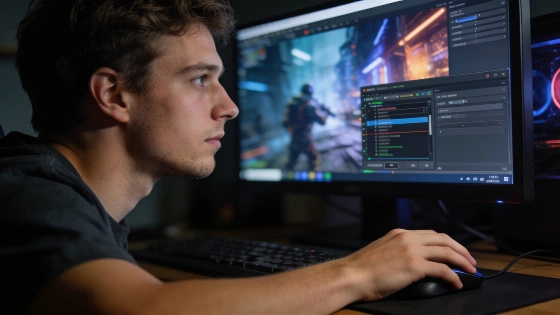
Version 0.9.12 of the Addon Manager for Lossless Scaling lets players replace NVIDIA Image Scaling with Intel XeSS and NVIDIA DLSS, with AMD FSR also available, even in games where developers never added these features. It brings modern upscaling options to games that do not officially support them.
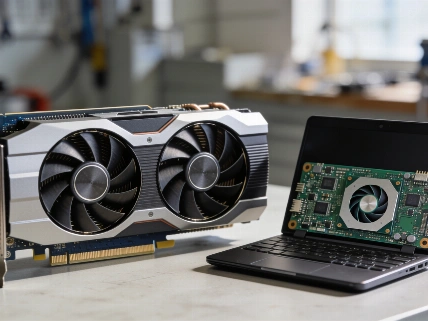
The update reroutes the scaling process to modern temporal upscalers, giving players access to advanced image reconstruction previously limited to certain hardware or software. Its basic highlight is full support for the Intel XeSS 3 SDK runtime version 2.0.2, which works on Intel Arc and AMD Radeon cards, as well as NVIDIA GeForce cards. Players can get sharper images and better frame rates in more games.
The 0.9.12 build adds controls for sharpness and anti-aliasing, and handles HDR content. Users can fine-tune edge clarity and HDR rendering to match their setup. The developer has also reworked how the tool interacts with the graphics pipeline, a change intended to make it run more smoothly and crash less often.
The Addon Manager is a community project, not an official Lossless Scaling extension. It works as an add-on for Lossless Scaling version 3.2.2.0 on Windows 10 and 11 x64. The official project repository says DLSS and FSR are managed in one place, alongside XeSS, allowing users to run the upscalers in games that never supported them. The 0.9.12 notes say XeSS works on any GPU with Shader Model 6.4, not just Intel Arc. For more details, the official project repository has documentation and update logs.
The new XeSS path has been tested only in synthetic benchmarks, not in real games, so users may encounter bugs or unusual behavior in some titles. Earlier patches improved HDR for DLSS and FSR. The developer also split vendor runtime libraries into separate system processes, so if a third-party upscaler crashes, the basic Lossless Scaling app keeps running.
The Addon Manager is now a tool for PC gamers seeking image quality regardless of which features a game developer supports. Cross-vendor upscaling is available through a modular setup, and user-driven tools are moving faster than official updates.