Meta spends 11.1% of Prometheus rack capacity on GPU recovery
After recording 1,000 daily training interruptions per 8,000 GPUs during Prometheus's first deployment phase, Meta says it cut that rate by 99% with a layered recovery system.
During Prometheus's first deployment phase, Meta recorded nearly 1,000 training interruptions each day for every 8,000 GPUs. A year later, the rate had fallen to 11 per day for the same number of GPUs, according to the company. That is a reduction of about 98.9%, or roughly 91 times; Meta attributed the figures to its engineering work.
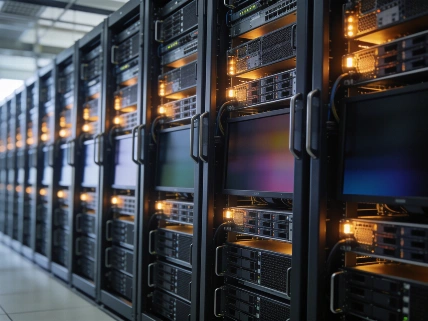
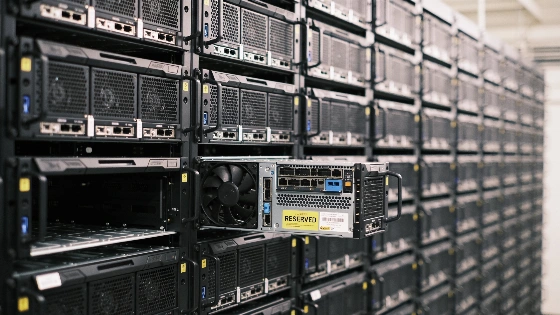
That reduction comes with a clear hardware cost: each 72-GPU NVLink domain keeps eight accelerators ready to replace failed units. The remaining 64 handle active training, leaving 11.1% of each domain's GPU capacity outside training work. The 64-GPU training slice is a power-of-two group, while the eight remaining GPUs are deliberately reserved as hot spares, not units that have already failed. Meta also keeps roughly 2% of racks in reserve for failures affecting an entire rack or pod.
Recovery begins inside the rack
Meta described the system in an October 19, 2026, post on its AI engineering blog. Prometheus runs in New Albany, Ohio, using GB200 and GB300 systems from Nvidia's Grace Blackwell family. Its 72-GPU NVLink domains allow the control system to bring a spare into the group when an accelerator fails, avoiding a wait for a technician to replace the failed part, as Meta Engineering explained. A 72-GPU domain is not necessarily a single physical rack: in a GB200 NVL72 two-rack configuration, two 36-GPU rack blocks form one domain.
The reserve is not a measure of failed hardware. Meta keeps eight units available by design, while faults can add other unavailable GPUs to the pool. At a 100,000-GPU scale, the same arrangement would require 11,100 spare units, which must be included in hardware and power plans despite doing no training work. The company also holds about 2% of racks in reserve for larger-scale failures.
The rack calculation has a useful parallel in NerdsMagazine's earlier rack analysis, which examined how memory allocations and server-power assumptions affect a modeled system estimate.
Different faults need different recovery paths
Meta says hot spares shorten rack-level interruptions. For a fault confined to one data-parallel model replica, its Parallelism-Aware Fault Tolerance system removes the affected replica while surviving replicas repeat the interrupted step. The failed slice then restarts on spare hosts and rejoins after resynchronization. The wider job continues with temporarily reduced aggregate throughput.
A fault that crosses replica boundaries needs another safeguard. Meta saves training state asynchronously across multiple storage tiers, and delta checkpointing records changes rather than rewriting the full state each time. The saved state includes gradients and optimizer data. If a cluster-wide failure forces a restart, the job resumes from its newest completed checkpoint instead of repeating the full run. Checkpoint frequency therefore balances lost work against storage traffic.
Meta credits its 99% interruption reduction to hot spares and replica isolation, with distributed checkpoints and continuous link monitoring also contributing. It counted any system error that stopped a run, including a timeout or crash; after an interruption, training resumed from the last known-good checkpoint. For a fault affecting more than one data-parallel replica, the company says the entire job returns to that checkpoint.
Scaling the reliability system
Blackwell expanded the NVLink domain from eight GPUs in earlier H100 NVL8 systems to 72, nine times as many accelerators in the tightly connected group. Prometheus contains more than 600,000 NVLink connections. Meta says marginal signal degradation can trigger frequent link-recovery cycles, so it uses continuous telemetry and L11 diagnostic burns to identify weak links before production.
Power transients also require planning when large groups of GPUs ramp up or down. Meta says it must reserve enough electrical headroom for startup. It reported more than 85% goodput for pretraining and more than 90% for reinforcement learning on Muse Wonder; goodput tracks useful training output rather than raw GPU activity.
Meta's current reported rate is 11 interruptions per day for every 8,000 GPUs. Its target is two for the same unit, equivalent to 100,000 GPU-hours mean time between interrupts. The company plans to add Vera Rubin systems as it expands toward 1 million accelerators and 1 gigawatt of capacity across datacenters.