Microsoft patent proposes paying owners for spare GPU time
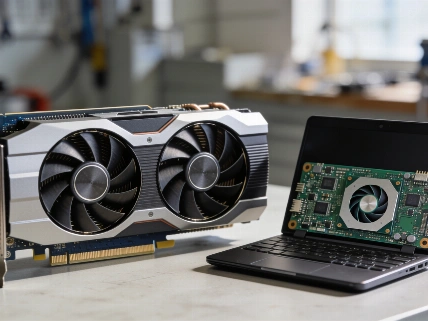
A Microsoft patent application outlines how idle GPUs in gaming PCs, laptops and smartphones could handle small AI-training tasks. The proposal includes device checks and possible owner compensation, but Microsoft has announced no service based on it.
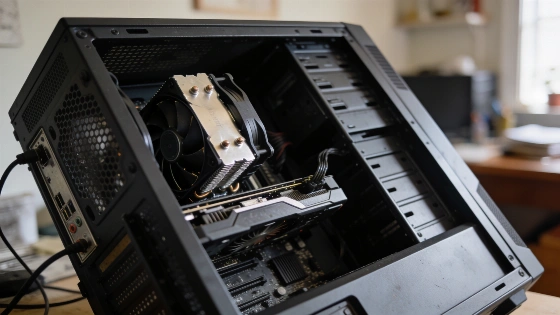
A training job could be paused if a participating GPU runs too warm or crosses a preset performance limit, according to a Microsoft patent application. The safeguards are part of a proposal to spread small AI-training tasks across privately owned devices. Microsoft has announced no product or service based on the idea. The concept resembles volunteer distributed-computing projects such as Folding@home, with proposed incentives and controls for consumer hardware.
The U.S. Patent and Trademark Office published the application on Nov. 5, 2026, as US 2026/0349820 A1. Titled "Opportunistic Micro-training on Edge Devices Using Spare GPU Utilization," it names Microsoft Technology Licensing as the applicant and Aditya Vasanth Challapally of San Francisco as the sole inventor. Microsoft submitted it on April 30, 2025.
The system would divide model training into independently trainable "micro-tasks" that could run separately. Individual tasks could be matched to available resources on gaming PCs, laptops, smartphones and other edge devices, rather than requiring one large centralized machine. It would assess possible divisions by the data traffic they require between devices. The calculation would also include temporary memory needs and how often a device must retrieve data stored elsewhere, as TechPowerUp reported.
Before assigning work, the service would monitor GPU and CPU load, memory use, temperature, power draw, memory bandwidth and compute queue depth. It would also factor in graphics-memory availability and other resource indicators when sizing a micro-task. Those readings, along with a device's usage history, would help forecast when it might be available and how much work it could handle. The system could also limit training memory to a percentage of the device's free memory.
The application says edge devices should experience "zero impact on the device's primary functions and user experience." It proposes checking hardware less often when a graphics chip is heavily loaded or warm. If a temperature reading or performance counter passes a set limit, the training job could be paused, stopped or canceled. The controls are intended to give interactive tasks, including gaming, priority.
Results would need validation because participating machines belong to outside owners. The proposal compares a device's output with results from other machines handling the same task, then weights updates according to agreement, age and the device's validation record. A device returning suspicious outliers would lose more reliability points than one that simply fails.
Compensation appears in the patent description, not in its claims. One passage says the system could credit an owner's account for computing supplied, with credits redeemable for access to the model. The description also mentions money or free software as possible rewards. Participation would be opt-in: owners would have to give express authorization before their hardware joined the network, as PCMag reported. Rewards would be tied to completed computing work.
None of the application's 20 claims mention payment. They cover task division, availability forecasts, task sizing and result weighting. The filing gives no payment rates, eligible hardware list or launch timeline, and offers no figures for comparing rewards with added electricity costs. It also does not specify what data a commercial service might collect beyond the hardware metrics described.
The proposal lands amid a wider discussion of personal-computer memory and compute. OpenAI CEO Sam Altman faced criticism in late October after arguing on the Cheeky Pint podcast that DRAM in personal computers wastes scarce memory that data centers could use more fully. On Nov. 4, at another user's request, he briefly changed his X display name to "Ram Altman." In a reply, Altman wrote: "i want you to have so much ram lets build more." Readers interested in GPU monitoring can also see this GPU activity breakdown.
Topics: