How Web Hosting Led Mark O'Shea to Supercomputer Operations
A 43 TB dataset helped produce a detailed image of a supernova remnant on Setonix. For Pawsey operations leader Mark O'Shea, research results like that are one of the job's clearest rewards.
A 43 TB dataset went through Setonix to produce a detailed image of a supernova remnant. For Mark O'Shea and his team at Australia's Pawsey Supercomputing Research Centre, seeing what researchers achieve with the machine is one of the job's clearest rewards. Pawsey's November 2026 archive also covered Setonix and research computing, including an item on the centre's Setonix-Q and quantum computing.
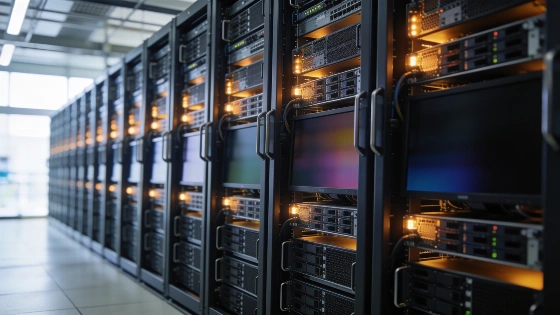
Setonix is an HPE Cray EX supercomputer with more than 200,000 AMD EPYC CPU cores and hundreds of AMD Instinct MI250X accelerators. Its GPU partition ranked 87th in the November TOP500 and 37th in the Green500, which measures computational performance per watt.
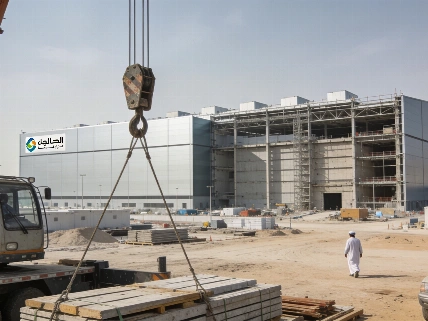
O'Shea's route to running that infrastructure began in web hosting. He told The Register that datacenters and supercomputers share operational challenges, particularly around cooling and power management. A separate project planned for higher-density AI and HPC workloads is covered in this Qatar data center report.
The scale of data handled across Pawsey's research-computing environment is also clear from ASKAP, the Australian Square Kilometre Array Pathfinder. Pawsey reported that ASKAP was generating 5.2 terabytes of data per second, processed on site before being streamed to its Galaxy platform, in its account of ASKAP data processing.
There is no single route into the field
Australia has no single formal training path for supercomputer administrators, O'Shea says. He developed the necessary skills over time. Some administrators start in academia, according to Andrew Underwood, Dell's chief technology officer for high-performance computing and artificial intelligence across the Asia-Pacific region, including Japan and China.
Underwood has seen scientists move toward HPC after encountering computing in their research. A biologist working with a large genomics database, for example, might become interested in the systems behind the work. O'Shea says PhD graduates sometimes stay at their universities and move from departmental computing into supercomputing administration.
University roles can provide a bridge. O'Shea told The Register that researchers may encounter supercomputer administration while working in enterprise-style or departmental system administration.
Keeping the work connected to research
Underwood says the close-knit supercomputing community needs to welcome people from diverse backgrounds. He points to the Student Cluster Competition as one way to introduce students to the field. He also cites eResearch and the SC Conference as places where students can learn and system administrators can continue their training.
For O'Shea, the scientific outcomes remain the clearest payoff. He told The Register: "It's an exciting place to be. But everyone on my team really loves it when we hear what the researchers are doing with the supercomputers. It's very motivating when the guys get to see the end results."