Microsoft Patent Proposes Credits for Idle GPU Power
A Microsoft patent application describes optional AI-training tasks that could use spare GPU capacity on personal devices in exchange for account credits. No service has been announced, and the filing gives no payout rates or hardware list.
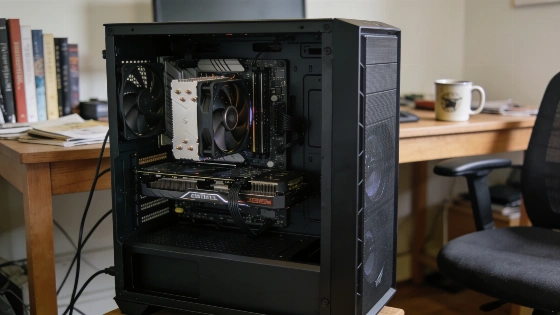
A proposed workload would back off when a device gets too hot or busy, limiting how much AI-training work runs alongside a user's normal activity. That safeguard is part of a Microsoft patent application for using spare computing capacity on personal devices.
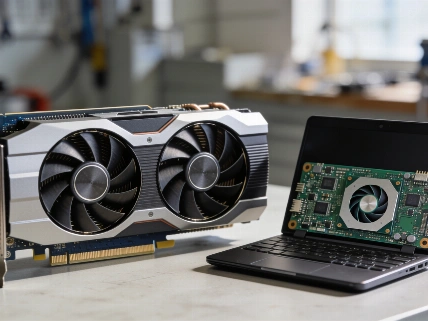
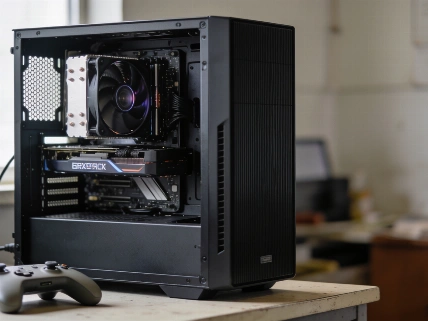
Microsoft Technology Licensing filed the application in April 2025; it was published on November 5, 2026, as US 2026/0349820 A1. Titled "Opportunistic Micro-training on Edge Devices Using Spare GPU Utilization," the filing names Aditya Vasanth Challapally as its sole inventor. It describes breaking machine-learning training into independently executable micro-tasks for devices such as phones and laptops. Gaming PCs are also covered when spare capacity is available. The published patent application describes using a model-dependency graph to identify task boundaries. The system considers communication cost and memory overhead, while also accounting for data locality.
How the proposed system would manage workloads
The software would monitor GPU utilization and CPU load, along with memory use. It would also track operating temperature and power consumption. Workloads could be sized to each device's available capacity, with assignments reduced or paused if the device becomes busy or overheated, or otherwise cannot handle the work. Results from different machines could be cross-checked. Returned computations could be evaluated using validation score and device reliability, with result staleness also considered. The application contains 20 claims covering the assignment of micro-tasks and evaluation of returned results.
The monitoring idea has a different purpose from the open-source utility covered in our GPU task monitor report, which tracks GPU activity by process and can show details about local AI models.
Credits are proposed but the economics are unclear
Completed work could be tracked and credited to a device owner's account. The filing describes possible exchanges for money or free software. It also mentions access credits for the trained model, but does not give a conversion rate or payout schedule. The compensation discussion appears in the application's description rather than its claims. The proposed workload would use electricity and could add heat. It could also increase fan noise and hardware utilization, while contributing to battery wear. Users would have no way to determine whether rewards would cover those costs.
The proposal is described as opt-in, and Microsoft has announced no Windows or Xbox service based on the idea. The filing describes a proposal, and patents do not necessarily become products.