Tendrils Secures $30 Million for a Parallel-First CPU
Tendrils says decades of compatibility-driven CPU design constrain conventional scaling. Its proposed hardware and open-source language are being developed together.
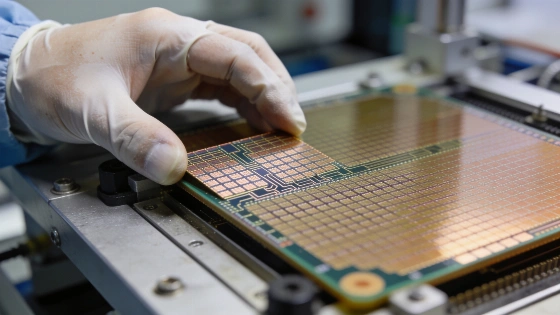
Modern CPUs still carry design choices dating to the 1970s, Tendrils argues. Compatibility with earlier single-core chips has kept inherited architecture in current designs, the company says, limiting how far conventional processors can scale.
Cambridge, UK-based Tendrils announced a $30 million round led by Benchmark on November 10-11, 2026, to develop a different design. The company plans a general-purpose processor with thousands of cores that operate in parallel. Visionaries Club described the financing as a seed round, as Tech Funding News reported.
Visionaries Club and the UK Sovereign AI Fund joined the round. FR8, Antimatter, Cloudberry VC, Conviction, Embassy Ventures and SV Angels also participated with a group of angel investors. Jack Altman joined the company's board.
The processor remains a development goal, not a commercial product. Tendrils is developing the hardware alongside Vine, an open-source programming language intended for parallel-first architectures.
Reworking the CPU model
In its announcement, Tendrils argues that layers of inherited architecture complicate scaling. It points to cache-coherency protocols, which keep shared data consistent across cores, and reorder buffers, which support out-of-order execution. Both mechanisms are tied to designs built around sequential execution.
The proposed approach moves away from shared mutable memory and linear instruction sequences. Tendrils' architecture is based on interaction nets, a computational model introduced by Yves Lafont in 1990. In this model, programs and data are represented as connected graphs, and computation proceeds through local rewriting rules. Independent rewrites can occur concurrently. Cloudberry VC describes the model as producing the same result regardless of the order in which eligible rewrites take place.
Cloudberry VC has also described a Tendrils example involving a nested-loop algorithm on lists of 200 items: on a hypothetical machine with unlimited cores, an average of 274 small steps could run at once. For lists ten times longer, the cited figure rises to 2,739. These figures illustrate theoretical concurrency in the model, rather than measured processor performance.
Tendrils says parallel-first hardware calls for a different programming model as well. Developers would need to work with the new model, rather than assume existing applications built around conventional sequential execution would run unchanged.
Vine is part of the hardware effort
To support that approach, Tendrils is developing Vine, an open-source programming language designed for parallel-first architectures based on interaction nets. The company is pursuing the processor and its software model together, rather than treating the language as an afterthought. Cloudberry VC describes Vine as available to try and compares its style to Rust.
Investor commentary has pointed to potential uses in work around AI models, including code execution between model responses, along with running tests and searching documents. Those are proposed applications for the architecture, alongside other branching workloads.
A separate GPU process tracker illustrates another software role: breaking down GPU activity by process. Tendrils' project instead centers on designing a programming model for its planned processor.
Tendrils frames the effort as a test of general-purpose computing designed around the processor and its programming model at the same time.
Topics: