XNULinux Brings a MacOS Desktop to Linux Without Virtualization
XNULinux loads Apple's XNU kernel as a Linux module, with a setup aimed at advanced users and specific hardware requirements.
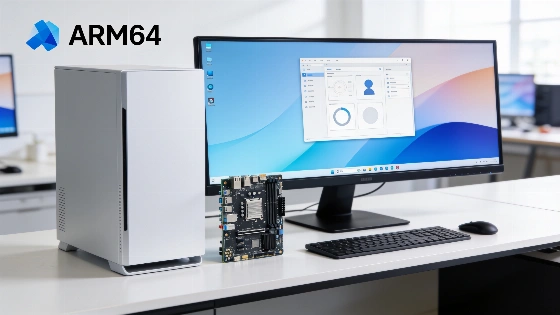
The stated setup calls for an ARM64 Linux host with pointer authentication support and a Mac with Xcode. The Linux kernel must use 4KB memory pages, and the host needs at least 16GB of RAM.
XNULinux builds Apple's open-source XNU kernel and loads it into an otherwise unmodified ARM64 Linux kernel as a module named xnu.ko. Its stated aim is to give Linux a "macOS personality," allowing macOS and Linux processes to coexist without running macOS in a conventional virtual machine. The project describes a desktop that includes Finder, Dock, Spotlight, Safari, and other familiar components. Its Linux-side and XNU-side code are separated by an interface called FKI. The project documentation says xnu.ko runs XNU code in its own address space and loads XNU's kernel collection.
This is a different kind of kernel-level work from the Intel Xe driver changes covered by NerdsMagazine: XNULinux aims to load an operating-system kernel as a module rather than change GPU provisioning behavior. Apple's documented virtualization route, by contrast, runs macOS as a guest in a virtual machine configured with a Mac hardware model, virtual CPUs, memory, and virtual devices, as described in its macOS virtualization documentation.
This is an experimental implementation for advanced users, not a one-click way to install macOS on Linux. Building the macOS system disk and GPU components requires a Mac with Xcode, along with an existing macOS 27 installation created using Apple's installer. The desktop can also SSH directly into the underlying Linux host and access it through network connections. The project's licensing follows its separation between the two sides: FKI and Linux-side components use GPL-2.0-only, while the XNU module and XNU patches use Apple's Public Source License 2.0. Linux identifies xnu.ko as a non-GPL module through MODULE_LICENSE("Proprietary"), which taints the kernel.
XNULinux's GitHub project page provides technical information, build instructions, and system requirements. The repository was created on November 20, 2026, and had been updated through November 23; it describes the work as experimental.
Topics: