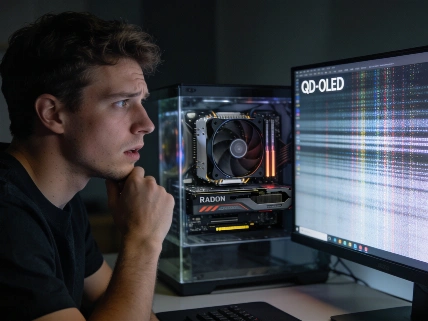
Sapphire Nitro Plus Radeon RX 9070 XT adapter meltdown reveals major GPU power risk
A Sapphire Nitro+ Radeon RX 9070 XT's 16-pin power adapter melted during a gaming session, causing a crash and hardware damage.
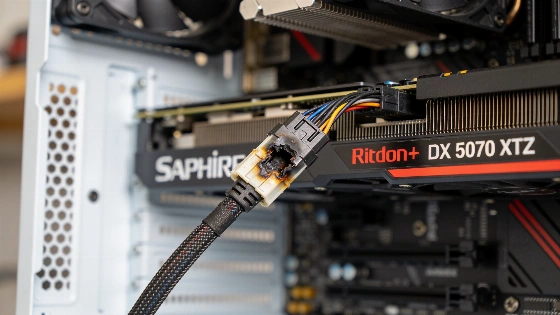
A gaming session ended with a melted 16-pin 12V-2x6 power adapter on a Sapphire Nitro+ Radeon RX 9070 XT, a system crash and hardware damage.
The user first saw a black screen as the graphics card's fans ramped up to full speed. After the crash, an inspection revealed that the 16-pin adapter had melted at the power interface, with heat warping the plastic. In unfavorable conditions, local temperatures at 16-pin GPU power connectors can exceed 170 °C within minutes, hot enough to deform and melt the housing.
Why the adapter failed
The PC used a Silverstone 1500W power supply with 80 Plus Titanium certification that met the ATX 3.0 standard. It lacked a native 16-pin connector, though, so the user relied on an adapter to convert older connectors to the 16-pin 12V-2x6 connection required by the GPU. Hardware experts warn that adapters can be risky: uneven current across the contacts can create hot spots and melt the plastic.
Sapphire Nitro+ cards have drawn attention over damaged 12V-2x6 connectors, with more users now reporting problems. AMD cards traditionally used classic 8-pin connectors, so this failure mode has come as a shock to many making the switch to next-gen power standards.
What experts now advise
Tech support forums and hardware experts are warning owners of high-end GPUs. Their advice is blunt: avoid adapters and upgrade to an ATX 3.1 power supply with a direct, native cable for the GPU. That eliminates the adapter as a weak link. Direct ATX 3.1 cables are safer than daisy-chained PCIe cables or adapters. The MSI Korea technical blog explains the issue in detail.
The incident is a warning for PC builders and gamers. New GPUs need more power, and new connectors have arrived. Using old adapters carries a risk of failure. The safest approach is to pair high-end GPUs with modern power supplies for stable operation under heavy load. The switch from 12VHPWR to 12V-2x6 connectors was intended to reduce the risk of loose connections. The updated design has longer power contacts and shorter signal pins. Power flows only when the connector is fully locked in, as the FlowUP technical overview explains. Tom's Hardware reports that PCI-SIG has acknowledged the industry-wide 16-pin connector issue and urged members to conduct thorough connection testing and reduce user-error risks, indicating that the problem extends beyond the new power standard.
Topics: