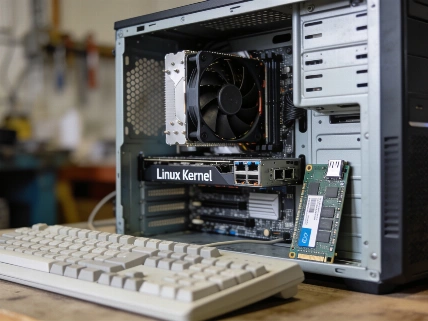
Linux 7.3 reshapes VRAM handling and expands Radeon support
Linux 7.3 changes how AMD graphics memory is managed under pressure and improves compatibility with older Radeon cards. Some gains depend on the drivers and userspace tools installed, and the release promises no universal gaming boost.
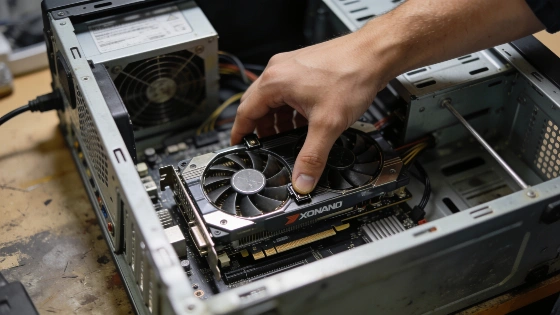
Linus Torvalds released Linux 7.3 on October 18, 2026, after a two-week merge window and seven release candidates. The kernel changes how AMD graphics memory is managed when VRAM runs short. When a game requests protected memory, the system can first evict unprotected buffers from VRAM to make room for the higher-priority allocation. Better memory handling could reduce stuttering and performance drops, but it does not increase a graphics card's physical memory capacity. The Linux 7.3 feature overview describes the changes.
A kernel upgrade alone will not switch on the full set of VRAM changes. Users also need compatible GPU drivers and userspace tools such as dmemcg-booster and plasma-foreground-booster. Some improvements require newer Mesa components. The work targets memory-constrained AMD cards, including the roughly 8-GB class. Its practical effect depends on the GPU configuration. Driver and game support matter too. More VRAM work is planned for future kernel releases.
Older Radeon cards get attention
The release improves graphics compatibility for older Radeon hardware, covering cards from the HD 7000 series through Polaris. Fiji is included as well. Changes to DRM and format modifiers broaden support. Some older Radeon GPUs can also recover more reliably from crashes without requiring a full reboot. Phoronix's release coverage also highlights the legacy AMD GPU updates.
That could make the update useful on aging systems, though the release promises no universal performance gain. CPU scheduling changes may help gaming performance, particularly on older hardware. No benchmark figures are provided.
Controller and graphics support expands
Linux 7.3 adds initial built-in driver support for Valve's 2026 Steam Controller. MSI Claw owners also get a new driver for the handheld's built-in gamepad. These are kernel-level additions. Full functionality still depends on compatible userspace components and application support.
Intel Nova Lake graphics are enabled by default. The open-source Nouveau driver gains groundwork for Vulkan Video hardware decoding. Btrfs and EXT4 receive storage improvements, while XFS is updated. The release also prepares for AMD's upcoming Zen 6 processors.
Linux 7.3 spans 18,765 commits from more than 3,000 developers. It adds Rust support on PowerPC. It also adds userfaultfd support for tracking guest virtual-machine memory working sets. SMB server compatibility with Apple Time Machine is included. Full support for cgroup sub-schedulers is part of the release too. The release announcement coverage outlines the wider set of kernel updates.
A separate kernel security issue appears in NerdsMagazine's vhost flaw report. The report described how a flaw could give local users root access. That issue is distinct from Linux 7.3's gaming improvements.
Torvalds said the final 7.3 release was out and the 7.4 merge window would open the following day. He noted that a family vacation could make his schedule unusual, and the merge window might need an extra week. Incoming changes still had to be ready before the window opened.
The complete technical changelog is available in the Linux 7.3 changelog.
Topics: