
Valve engineer brings old AMD GPUs back to life for Linux gaming
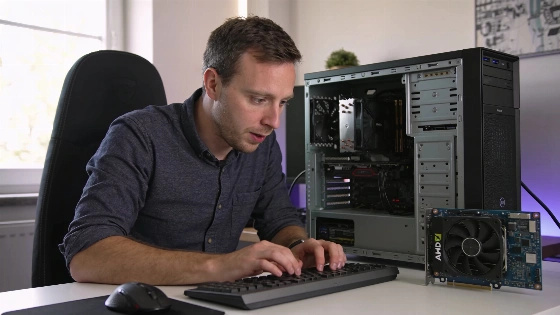
Linux users with old AMD GCN 1.0 and 1.1 graphics cards just got a surprise. Their hardware, once left behind, now runs modern games better than anyone expected. Timur Kristóf, a lead engineer on Valve's Linux graphics team, made it happen. He rewrote key parts of the AMDGPU kernel driver. Suddenly, cards many called obsolete are back in the game.
The Southern Islands (GCN 1.0) and Sea Islands (GCN 1.1) families-including Tahiti, Pitcairn, Cape Verde, Oland, Hainan, Hawaii, and Bonaire-were previously only supported by AMDGPU through experimental kernel parameters, not as the default driver.
Modern features on old cards
This was not just cleanup work. By switching GCN 1.0 and 1.1 cards to AMDGPU, Kristóf opened the door to the RADV Vulkan driver. Performance jumped. The Linux 6.19 release last year brought a 30% boost for these older AMD Radeon GPUs. That was out of reach before this work.
The main practical benefit of moving these older GPUs to AMDGPU is unlocking access to the RADV Vulkan driver, which was not available through the legacy Radeon support path. This change enables modern gaming features and improved compatibility for users of GCN 1.0 and 1.1 hardware.
Valve fills the gap left by AMD
AMD has mostly moved on from these cards. Kristóf, with Valve's backing, stepped in. His work improved daily life for users still running GCN 1.0 and 1.1 hardware. It also set a new bar for legacy support in open-source projects. That matters.
Kristóf recently spoke at an event in Toronto. He shared his process and the lessons learned for anyone interested in AMDGPU kernel driver work. The talk and PDF slides give a rare look inside open-source graphics driver development. The details are all there.
But this story is about more than code. It's about keeping old hardware useful. In tech, most companies drop support for aging devices. Kristóf proved that with skill and drive, even decade-old GPUs can get a second chance. For Linux gamers and open-source fans, that's a win. You don't always need new hardware. Sometimes, you just need the right person to care.