Researcher Releases Unpatched FastUnlock Windows 11 Lock Screen Exploit
FastUnlock uses Narrator to reach settings from the Windows 11 sign-in screen, with physical access and a Microsoft-linked account required. Microsoft has not assigned a CVE or published an advisory or fix.
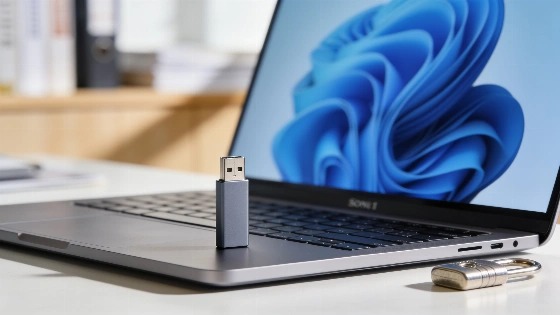
FastUnlock's reported attack chain ends with a USB drive used to run code as "WsiAccount," the account Windows uses for its lock screen. Chaotic Eclipse says the first code execution happens in that lock-screen account context, not with immediate administrator access. The researcher also claims the same flaw can defeat BitLocker on a fully patched Windows 11 machine.
Chaotic Eclipse, who also publishes as Nightmare-Eclipse and MSNightmare, disclosed the issue on GitHub on November 19, 2026, without prior coordination. The FastUnlock repository describes a problem in how Narrator handles its interface while an account is locked: Narrator can focus a background window it owns, opening a path into settings before the user signs in. The write-up identifies the "Math reading settings" link as a route into settings that should not ordinarily be available before authentication.
The attack starts at the Microsoft account password-recovery prompt, such as "I forgot my PIN," on the sign-in screen. Narrator then takes the user into settings and through Bluetooth and device settings to AutoPlay's removable-drive option, which opens a folder in File Explorer. The researcher says a USB drive is used at the end of the chain to run a binary as WsiAccount. FastUnlock requires physical access and at least one local account linked to an online Microsoft account. PCs without such an account do not meet the researcher's stated requirements.
BitLocker result remains a researcher claim
Chaotic Eclipse says it took five minutes from discovering the bug to breaching a BitLocker-encrypted Windows 11 26H2 machine with the November 2026 Patch Tuesday updates installed. The researcher reports consistent results across every machine tested, but has not tested other Windows versions, including Windows 10.
Chaotic Eclipse also said they did not have a USB stick on hand while preparing the demonstration. The complete USB execution sequence was not shown, though the researcher claims to have performed the final step repeatedly. Cyber Kendra has not independently reproduced the attack.
As of November 19, FastUnlock has no CVE. Microsoft has published neither an advisory nor a fix, and no exploitation in the wild has been reported. The researcher says on X that blocking Narrator through AppLocker or a custom DACL, an access control list, could serve as a temporary fix.
FastUnlock's author compares it with an earlier lock-screen bypass, ZDI-21-1053. Naceri published a Narrator-driven BitLocker bypass for Windows touch devices in January 2021. Chaotic Eclipse describes FastUnlock as a distinct, more convenient route that starts from the account-recovery interface. The issue concerns access control rather than interface customization, unlike the Windows 11 taskbar placement settings covered in another report.
FastUnlock follows several Windows zero-days released by Chaotic Eclipse since April 2026. SignDrop, a CLFS privilege-escalation flaw, appeared nine days earlier. In a separate post on X, the researcher said SignDrop could potentially be used after FastUnlock if a machine is also vulnerable to SignDrop. That would be a separate, conditional elevation step. Microsoft mitigated YellowKey (CVE-2026-45585), a separate BitLocker bypass, in May. Huntress later investigated a real intrusion involving BlueHammer; that incident also involved RedSun and UnDefend.
Administrators responsible for laptops that could be lost or stolen should watch for an out-of-band update or the December 2026 Patch Tuesday release.
Topics: