
iPhone 18 Pro Max: Apple's new camera muscle and battery king
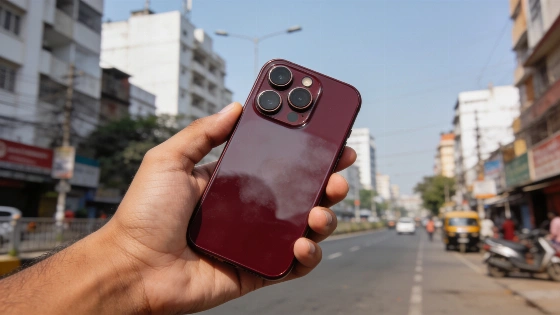
Apple's iPhone 18 Pro Max shakes up the flagship game. It brings a mechanical variable aperture camera, a big leap in on-device AI, and battery life that leaves every older iPhone behind.
Independent reviews report that the iPhone 18 Pro Max battery lasts over 30 hours in continuous 4K video playback, a significant jump from the previous generation.
Battery worries? Gone. In daily use, the iPhone 18 Pro Max powers through a full day of heavy travel, streaming, and multitasking. There's usually enough left to get you into the next morning. On Wi-Fi, it can stream for up to 43 hours on one charge. Xfinity and other retailers say Apple's official claim is up to 45 hours of video playback and up to 40 hours of streaming video. No iPhone has lasted this long before. Fast charging is quick: 50 percent in 15 minutes. Plug in for five minutes and get seven hours of video playback.
Camera hardware and AI security
The camera is where Apple pushes hardest. The triple-lens setup includes a 48MP Pro Fusion wide camera with a mechanical six-blade iris. You can switch between f/1.48 and f/4.0. Reviews point out the aperture steps are mechanical and fixed-four stops, not a smooth range. This gives sharper low-light shots, starburst effects, and more control. All in auto mode. The 48MP ultra-wide and telephoto lenses complete the system. CNET reports up to 8x optical zoom and 40x digital. Video goes up to 4K Dolby Vision at 120 fps. You can also shoot spatial video at 1080p for Vision Pro playback.
The iPhone 18 Pro Max features a battery capacity of 5,391 mAh for the physical SIM version and 5,567 mAh for the eSIM-only/US version, as detailed in independent device reviews.
Security and authenticity get a boost. Every photo is invisibly marked with an Apple Reference Image tag. If you edit with generative AI, the image gets a SynthID. This helps spot fake or altered media. Apple wants to slow the spread of AI fakes on social media.
Design, durability, and eco focus
Apple's green push is real. The iPhone 18 Pro Max uses 40 percent recycled materials. The battery is made with 100 percent recycled cobalt. The enclosure uses 85 percent recycled aluminum. Half the manufacturing energy is renewable. The box is all fiber and can be recycled at home.
The frame is aerospace-grade 7000 series aluminum. The Ceramic Shield 2 display is tougher against scratches. It's IP68 water resistant. But glass and metal still break if dropped. Apple's MagSafe cases and AppleCare+ are smart for anyone who wants to avoid big repair bills.
Colors are Black, Silver, Glacier, and Burgundy. Glacier and Burgundy resist fingerprints better than the darker ones. The 6.9-inch Super Retina XDR display uses LPTO+ tech and packs 460 ppi. It looks sharp indoors and outside. The Dynamic Island is smaller now, giving more room for multitasking.
Connectivity and software
The new C2 modem brings stable 5G. The N1 chip adds Wi-Fi 7 and Bluetooth 6. Second-gen Ultra Wideband helps track devices more precisely. Crash Detection is still here. In some countries, you get satellite emergency help.
iOS 27 launches with a new Liquid Glass UI. Siri gets a beta upgrade with Apple Intelligence, making it more conversational and useful. New AI features like Spatial Reframing, Extend, and Clean Up run on the device. The Image Playground app creates photorealistic images. Safari's Notify Me keeps you updated on web changes. All AI runs on-device or through Private Cloud Compute for privacy.
Early buyers saw some bugs-Face ID failures and camera freezes. Apple fixed these within a week. That's normal for big releases. The main features work as promised.
Thinking about upgrading? The iPhone 18 Pro Max is a big step up if you have an iPhone 15 Pro or older. Premium Android users may want to switch. If you own an iPhone 17 Pro Max or 16 Pro Max, the design is familiar and the jump is smaller. Prices start at Rs 1,79,900 for 256GB. The 2TB model goes up to Rs 3,29,900.
For a detailed look at how the iPhone 18 Pro Max stacks up against the last model in weight and price, check our earlier breakdown.
This is not just a spec bump. The iPhone 18 Pro Max brings real camera upgrades, smarter AI, and battery life that finally matches the price. The design may look the same, but the power, security, and endurance are new. For users who want the best, this iPhone finally delivers.