GTA 6 Crash Reports Raise Concerns for Xbox and PS5 Consoles
Players report shutdowns and hard crashes on Xbox Series X and S while playing Grand Theft Auto VI. Heat and memory pressure are among the suggested causes, but the reports do not establish one confirmed fault.
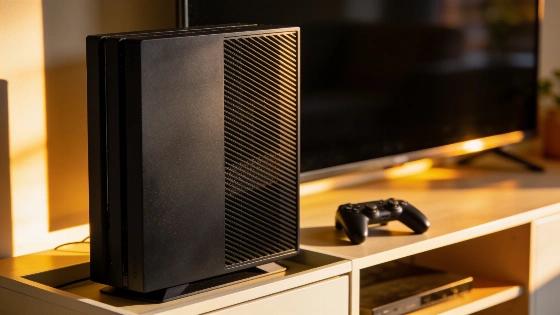
A console that crosses its thermal safety threshold can shut itself down to limit the risk of permanent silicon damage.
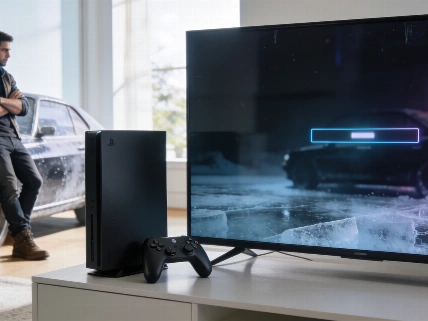
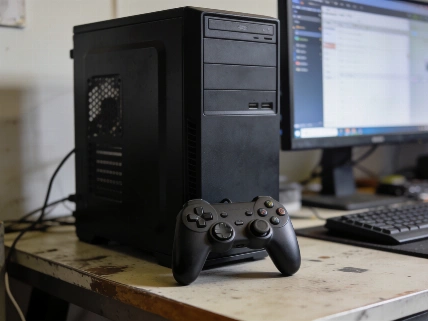
Players have reported thermal shutdowns and hard crashes on Xbox Series X and S while playing Grand Theft Auto VI (GTA 6). Similar concerns have surfaced on PS5. The account describes the problems as fixable and says they do not indicate extensive hardware damage; social-media images alone do not establish that a console is permanently damaged. Reported Xbox symptoms include returns to the dashboard and unresponsive systems. Some consoles power on without displaying video. The accounts have come largely from repair technicians and players, rather than Microsoft diagnostic data, and Gadgets 360's report notes that a common cause has not been established. Microsoft and Sony have not confirmed widespread GTA VI-related hardware failures.
Several possible causes remain in play
The proposed explanation centers on heavy system use and heat. GTA VI is described as using demanding crowd simulation and ray-traced global illumination. It also streams assets continuously across Vice City and the state of Leonida, adding work for the console's APU and storage controller.
Cooling can become less effective as a console ages. Thermal paste may dry out, while dust can collect in the heatsink. The source also identifies uneven liquid-metal distribution as a possible concern in vertically positioned PS5 units. These are possible contributors, not a confirmed diagnosis for every shutdown.
Memory pressure may be another factor on Xbox Series S. It has 10GB of shared GDDR6 RAM, with 8GB usable for games. Microsoft's Xbox Series S specifications list the memory as 8GB running at 224GB/s and 2GB at 56GB/s, alongside a 4-teraflop GPU and a 512GB custom NVMe SSD. The source says heavy use during complex weather changes may lead to a crash, a return to the Xbox dashboard or a full system freeze.
Storage is also a concern raised in the report. An almost-full internal SSD may contribute to thermal throttling during asset streaming, with possible stuttering or system locks. The report does not establish that low storage causes every crash. Microsoft lists the SSD's raw input/output throughput at 2.4GB/s, with compressed throughput of up to 4.8GB/s using dedicated hardware decompression.
Checks to try before seeking repair
Start with reversible steps. Readers dealing with freezes on other devices can also see this Chromebook guide, though its instructions are not specific to consoles.
- Clear the vents. Place the console in an open, well-ventilated spot with 4 to 6 inches of clearance around intake and exhaust vents. Turn it off and unplug it before clearing dust with compressed air or a soft brush. On PS5, removing the side plates is recommended for checking dust buildup. Sony's PS5 Safety Guide specifies at least 10 centimetres of clearance from a wall and advises users to turn the console off and let it cool if an overheating warning appears. It also says to keep vents unobstructed and leave heat-dissipation components attached to an installed M.2 SSD.
- Free internal SSD space. Aim to leave 15% to 20% of the drive available. The source says a nearly full drive may struggle during asset streaming.
- Reduce graphics and background load. Switching from Fidelity Mode to Performance Mode may reduce GPU demand. On Xbox Series X or S, close games in Quick Resume before launching GTA 6. The source also suggests lowering automatic game-clip capture from 4K to 1080p.
- Power-cycle the console. On Xbox Series X or S, hold the physical power button for 10 seconds, unplug the power cord for 2 minutes, then reconnect it. On PS5, enter Safe Mode by holding the power button until the second beep, then select the cache-clearing and database-rebuilding options.
- Check the power connection. Connect the console directly to a wall socket rather than an overloaded power strip or an old surge protector. The source lists power inconsistency under heavy GPU load as another possible reason for sudden shutdowns.
Topics: