
Drones Take Over: Real-Time Eyes in the Sky
Wildfires move fast. So do search teams when someone disappears in rough country. In 2025, drones are the tool that gets there first. They fly through smoke, over floods, and across ground too risky for people. They send back live thermal images and exact locations. Ground teams can't keep up. This is not a future dream. It's how emergency crews, logistics firms, and farmers work now.
In 2026, over 33,000 drones were deployed in China's Henan province to protect crops and accelerate disaster response, demonstrating the scale at which UAVs are now integrated into critical infrastructure.
Look at farming. Drones with multispectral and thermal sensors scan fields for pests, dry spots, or missing nutrients. Farmers don't wait for crops to show damage. They act on live data. They spray only where needed. They use less chemical. Yields go up. This is precision farming. Every flight saves money and helps the land. Bayer reports that drones with advanced cameras spot plant stress from pests, disease, or drought before it's visible. That means faster, targeted treatment and healthier crops. Bayer's digital farming overview shows how these tools are changing field work.
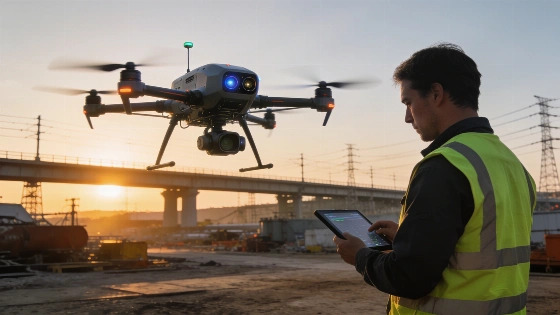
Infrastructure checks have changed too. No more dangling inspectors from ropes or building scaffolds. Drones fly close to bridges, power lines, wind turbines, and oil rigs. They take sharp photos and thermal scans from angles people can't reach. Companies like Con Edison and Shell now use drones for regular inspections. They build digital twins of their assets. This helps them spot wear, predict breakdowns, and fix problems before things go wrong. In the UK, SSE just renewed a multi-year deal for drone inspections of its power grid. Drone checks are now standard in the energy world.
After Typhoon Dolphin, researchers in China used patrol drones to transmit real-time soil moisture data to smart management platforms, enabling faster drainage and reducing crop losses.
Conservation groups use drones as quiet watchers. WWF and Greenpeace fly them to track animals, map habitats, and spot illegal logging or pollution. Drones don't disturb wildlife. They fly often and cover ground fast. The data they collect would take weeks on foot. Now, groups can measure their impact and change plans on the fly.
Police and public safety teams have joined in. Drones give a bird's-eye view at events, crime scenes, and during tactical calls. They send back live video. Officers stay safer. Decisions come faster. No need for costly helicopters. In September 2026, the Ottawa County Sheriff's Office in Michigan showed how a drone could reach an emergency in minutes, find a swimmer, drop a life ring, and stream thermal video during a mock chemical fire. Reuters reported the test. Reuters coverage of the Ottawa County demonstration shows how fast and flexible drones are in emergencies.
Construction sites are now data-rich. Project managers use drones for mapping, tracking progress, and measuring volumes. They turn worksites into digital twins. This steady stream of aerial data means tighter schedules and better budgets. It works for big projects and small builds.
Science teams use drones as flying labs. From Antarctic ice to volcanoes, NASA and NOAA send UAVs to gather air samples and watch events too risky for people. Drones get close and stay longer than satellites or planes. The result? New discoveries. Better data.
Filmmakers, marketers, and real estate agents now use drones for sweeping aerial shots. These images used to cost a fortune. Now, anyone can get them. The real value isn't just pretty pictures. It's the way aerial views show scale, context, and emotion. Ordinary scenes become stories that stick.
All these uses have one thing in common. Drones give a view that ground tools can't. The winners are the ones who focus on the data they need, not just the job at hand. They pick reliable drones, plug the data into their systems, and look for results-digital twins, thermal maps, or live video feeds.
The gap is growing. Those who use drones pull ahead. Those who don't fall behind. Fast damage checks, constant asset monitoring, and up-to-date digital records are now must-haves. Not extras. The sky is open. It's the new ground for safety, speed, and smart decisions. Move now, use data, and you'll lead the pack.
Ready to step up? Platforms from Innoflight Technology offer the reliability and flight time needed for tough jobs like asset checks, LiDAR surveys, and ISR missions. The future is clear. In 2025, real power flies.