
Six motorcycle journeys that redefine adventure travel
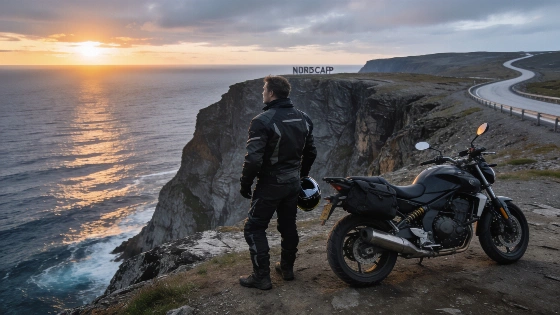
Norway's Nordkapp sits at the edge of Europe. The Arctic wind cuts through heavy gear. The Barents Sea stretches out ahead, cold and open. For a motorcyclist, this is the kind of place where the road matters more than the destination.
That idea connects some of the world's best motorcycle journeys. They are not simply scenic drives. Some cross deserts, mountain passes or empty plains. Others follow old highways through towns that still carry traces of another era. What they share is distance, changing terrain and the feeling that every day on the bike is different.
North Cape and the Atlantic Road, Norway
The ride to North Cape is often described by motorcyclists as a trip of a lifetime. One of the classic routes starts in southern or central Norway and heads north through the country's fjords and mountain roads.
Trollstigen is one of the early highlights, with tight hairpin bends and steep mountain scenery. From there, riders can continue toward Geirangerfjord and Molde before reaching the Atlantic Road. This section links small islands through a series of bridges directly above the ocean.
Then the landscape opens up. The E6 heads through Norwegian Lapland, where long stretches of road run through forests, mountains and sparsely populated Arctic country. A detour to the Lofoten Islands adds another dramatic section before the final push north.
Nordkapp is the reward. The last kilometers run toward the Barents Sea and end near the famous Globe monument. Between late May and late July, riders can also experience the midnight sun.
Route 66, United States
Route 66 is one of the best known road trips in the United States. The complete historic route covers about 3,900 kilometers and passes through eight states: Illinois, Missouri, Kansas, Oklahoma, Texas, New Mexico, Arizona and California. It connects Chicago with Santa Monica. According to tgcom24, the route is about 2,400 miles long.
The ride begins in Chicago before leaving the city for the Midwest. Old diners, roadside signs and historic motels still survive along parts of the route, especially through Oklahoma and Texas.
Further west, the landscape changes fast. New Mexico and Arizona bring desert roads and wide open views. Popular stops and detours include Santa Fe, Albuquerque, Petrified Forest National Park and the Grand Canyon.
The final section crosses the Mojave Desert into California. Route 66 ends symbolically at Santa Monica Pier near Los Angeles under the "End of the Trail" sign.
Morocco
Morocco offers a very different ride. Here the route can combine old cities, mountain passes and the edge of the Sahara in one trip.
Fes and Marrakech make natural starting points. From there, the road climbs into the Atlas Mountains. The Tizi n'Tichka pass rises above 2,000 meters and gives riders a long series of bends through dry mountain scenery.
The Dades and Todra Gorges add narrower roads and steep rock walls. After the mountains, the landscape starts to flatten and the desert takes over. Many routes continue toward the Sahara, where some riders spend a night in a Berber tented camp away from towns and artificial light.
It is a sharp change. Busy streets disappear. Sand, rock and open sky take their place.
Bhutan
Bhutan mixes Himalayan roads with monasteries and high mountain passes. The journey is slower than many long distance motorcycle routes, but the terrain makes every section demanding.
One of the best known stops is Tiger's Nest, the monastery built on a cliff at about 3,120 meters. It requires leaving the bike and completing part of the approach on foot.
Back on the road, Dochula Pass reaches around 3,100 meters and opens onto views of the Himalayas. The route can then continue through the Phobjikha Valley, with forests of pine and rhododendron on both sides.
Thimphu provides a very different finish. Bhutan's capital is known for intersections where traffic officers direct cars with hand signals instead of conventional traffic lights.
Bolivia, Chile and Argentina
South America offers one of the toughest rides on the list. A route through Bolivia, Chile and Argentina can combine salt flats, desert, high Andes passes and the long roads of Patagonia.
Uyuni Salt Flats in Bolivia is a natural starting point. It is the largest salt flat in the world and creates a landscape unlike a normal road surface. From Bolivia, riders can move toward Chile and the Atacama Desert around San Pedro.
Altitude becomes a serious factor. The route can climb through the Andes and across passes such as the Agua Negra Pass between Chile and Argentina, which rises above 4,500 meters.
Further south, riders can connect with Carretera Austral and Argentina's Route 40. Both lead into Patagonia, where distances grow and towns become less frequent.
The journey can continue through San Martin de los Andes and eventually toward Tierra del Fuego. Ushuaia is the classic final stop. For many riders, it feels like the end of the road.
Red Centre and Great Ocean Road, Australia
Australia offers two completely different riding environments in a single long journey. The first is the dry interior. The second is the southern coast.
Alice Springs is a common starting point in the Red Centre. From there, the Lasseter Highway leads toward Uluru. Riders can also make a detour to Kings Canyon before turning south.
The Stuart Highway runs through vast areas of the Australian interior. Coober Pedy is one of the most unusual stops along the way, known for opal mining and underground buildings built to escape the desert heat.
After Adelaide, the character of the trip changes. The Great Ocean Road follows the coast through bends and cliffs above the sea. The Twelve Apostles, a group of limestone formations rising from the water, are one of the route's best known sights.
The road eventually reaches Melbourne. Motorcycle fans can also continue toward Phillip Island, home to one of Australia's best known racing circuits.
The road becomes the trip
These routes ask very different things from a rider. Norway brings cold weather and long Arctic distances. Morocco and Australia bring heat. The Andes add altitude. Route 66 is easier physically, but much longer and richer in roadside history.
None of them is only about reaching a final point. The appeal is the road itself. A motorcycle makes every change in weather, surface and landscape immediate. That is why these journeys stay with riders long after the engine is switched off.