Apple's China AI beta brings useful tools and early glitches
Chinese mainland users testing iOS 27.3 report Qwen login failures and battery drain, while some say photo cleanup and basic Siri commands work well. Apple plans a wider release in December 2026.
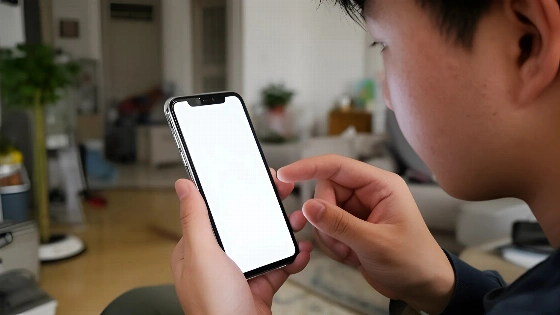
For some early testers, the Qwen extension failed at sign-in despite a normal mobile connection. Apple's iOS 27.3 developer beta, which began November 4, gives Chinese mainland users their first chance to try Apple Intelligence integrated with Alibaba's Qwen model. Beta reports point to useful features, but also reliability problems. The public release is planned for December 2026, about two years after Apple Intelligence first became available in the United States.
Some users reported overheating and faster battery drain. AI responses also stalled in weak network conditions. The beta is not yet a general release: Apple says the features will become available to all Chinese users with the official iOS 27.3 release in December 2026.
Useful tools alongside uneven Siri responses
Early reports suggest performance depends on the task and connection. Jiemian News said a Wednesday test found the photo-cleanup tool worked well on relatively simple backgrounds. Siri also handled basic commands and settings adjustments quickly. Some users described the features in Apple's native apps as convenient for everyday use.
More demanding Siri interactions drew criticism. Some users said Siri returned Baidu search results instead of AI-generated answers. Others reported brief replies to complex requests. In some cases, Siri ended a conversation after declining to use Qwen without offering an alternative.
Apple Intelligence combines Apple's own generative models with Alibaba's Qwen LLM in China. Through Siri, users can access Qwen's tools for understanding text and images and generating content. Apple also connects the model to Writing Tools and Visual Intelligence, where it can provide more detailed responses, generate text, understand images and answer questions about photos or PDFs. That makes the experience dependent on Apple's system-level integration and a working network connection.
Apple's initial China rollout is expected to include about 18 features, among them Writing Tools, summarization, Live Translation, Visual Intelligence, Clean Up, Genmoji, Notification Summaries and Priority Notifications. The newer AI-driven Siri system announced at WWDC 2026 is not part of the iOS 27.3 China release. Supported devices include iPhone 15 Pro and newer models; users must set both the iPhone and Siri language to English or Simplified Chinese. Availability on Mac and iPad in China remains subject to additional approvals.
Regulatory access and the market stakes
The beta follows regulatory clearance for Apple Intelligence and Alibaba's Qwen model in China. Apple received clearance from the Cyberspace Administration of China in July 2026, and China's Ministry of Industry and Information Technology approved the use of Alibaba AI models with iPhones in October. Tim Cook disclosed the approval during a visit to China in October. The ministry approved integration of Alibaba's AI models into several Apple handsets, including the iPhone Duo.
China's rules for generative-AI services require providers to register with the country's internet regulator, use local data centers and process data domestically. Apple reportedly discussed a partnership with Alibaba, Baidu, ByteDance and Tencent before proceeding with Alibaba. Agence France-Presse reported that the regulatory requirements and the search for a local partner shaped Apple's delayed China rollout.
Fu Liang, a Beijing-based independent telecom analyst, told the Global Times that cooperation with local companies requires a break-in period as technical issues are resolved. "Given time and resources, these small glitches can be ironed out," Fu said. He also said the partnerships matter to Apple's ability to remain competitive in the Chinese mainland market, where local AI models are familiar with users' habits and needs.
That access distinction follows NerdsMagazine's earlier iOS release coverage, which described features delayed after iOS 27 launched. The China beta adds a regional AI rollout to that software picture, while leaving general availability for December. Apple's China rollout announcement lists the public release with iOS 27.3.
Apple's sales revenue across the Chinese mainland, Taiwan region, Hong Kong and Macao rose 21 percent year-on-year in the September quarter, though it fell more than $1 billion short of estimates. Apple CEO John Ternus said the customer reaction to the latest lineup, including the iPhone Duo, had been positive after Tim Cook and Apple Chief Operating Officer Sabih Khan met customers, developers and partners in China.
Counterpoint Research's Smartphone Weekly Sales Tracker reported that global iPhone 18 Pro and Pro Max sales in their first three weeks after launch were 3.1 percent above the iPhone 17 Pro series' equivalent period in 2025. China recorded the strongest growth, at 29 percent year-on-year. The tracker attributed the increase to better early supply than in 2025 and price increases on competing Chinese Android flagship models.
Chinese handset makers are also moving toward deeper AI integration with operating systems and apps. ByteDance's Doubao rolled out a smartphone with deep AI integration in cooperation with ZTE in September.
Topics: