
WiMi launches hybrid quantum simulation to bypass hardware limits
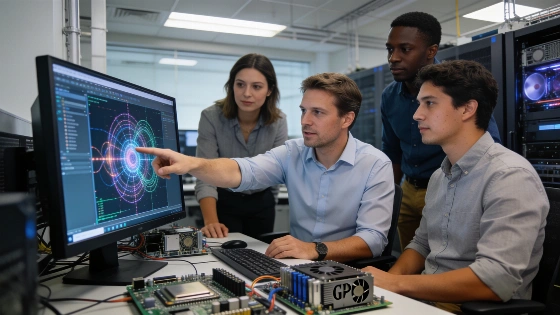
Quantum simulation has always hit a wall with hardware. Old systems forced researchers to work around slow chips and rigid setups. WiMi Hologram Cloud Inc. is changing that. The company has built a hybrid simulation model that uses both CPUs and GPUs together. This new approach could open up quantum research to more people and bigger ideas.
WiMi's simulation model is designed as software for running quantum algorithms on classical hardware, supporting research in quantum algorithms, circuit optimization, and mechanism verification.
Old quantum simulation models wasted resources. They struggled to use hardware well. WiMi's answer is a smart scheduler. It matches software needs to hardware power as the simulation runs. If a job needs raw CPU force, it gets it. If it needs GPU speed, the system shifts gears. No more idle machines. No more overloaded clusters. Every chip works.
The core of WiMi's system is a distributed computing design with adjustable granularity. The model breaks down simulation tasks into a tree structure. It manages these tasks in layers. This lets the system split, schedule, and balance work across different types of hardware. The result: less waste, faster simulation of complex quantum circuits, and no loss of accuracy.
WiMi Hologram Cloud announced on September 30, 2026, that its hybrid quantum simulation model leverages distributed task splitting and hierarchical scheduling across heterogeneous computing nodes, but no independent technical validation or peer-reviewed publication has been reported to date.
Quantum simulation demands precision. WiMi's architecture sharpens the logic for combination and projection operators. This lets the model track quantum state changes with high accuracy. The system also compresses high-dimensional quantum data and cuts out extra steps. That means less computing, less storage, and no drop in quality.
Compatibility matters too. WiMi's model runs on many types of classical hybrid computing platforms. Researchers don't need special hardware. This opens the door for more labs and teams to test and develop quantum algorithms. The model makes R&D and verification more accessible.
WiMi Hologram Cloud Inc. sees this model as a tool to speed up quantum tech. The company wants to shorten the R&D cycle and help move ideas from theory to hardware faster. The goal: push breakthroughs in quantum cryptography, communication, and information processing.
This hybrid setup isn't just a small step. It's a new standard for quantum simulation. WiMi is moving away from hardware limits. The company wants to give researchers more freedom and better tools. For anyone watching quantum tech, this model signals the end of rigid, wasteful simulation.
StockTitan reports that WiMi's model is for simulating quantum algorithms on classical hardware. It is not a physical quantum computer. The company highlights dynamic CPU and GPU allocation. But as of the announcement, there is no benchmark data or outside expert review. Quantum simulation on classical systems is still key because quantum hardware has limits-few qubits and high error rates. So far, only WiMi has commented. No third-party researchers or regulators have weighed in.