OpenAI's everyday-task benchmark reports a higher score for GPT-6 Astra
OpenAI says GPT-6 Astra scored 80% on its internal everyday-task benchmark, compared with 49.3% for GPT-5.2. The results come from tasks and scoring rubrics developed with ChatGPT users rather than an independent evaluation.
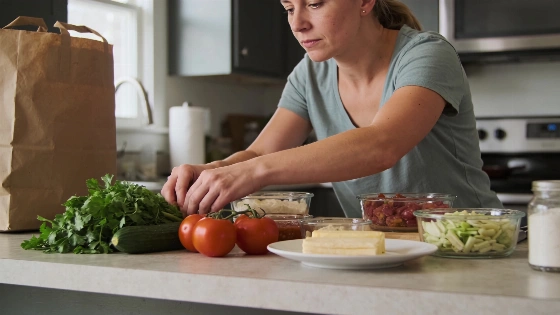
GPT-6 Astra scored 93.1% on a benchmark scenario about finding a kindergarten after a move and 90.4% on planning meals for a parent recently diagnosed with diabetes. OpenAI says the model scored 80.6% overall on prompts involving everyday tasks, while GPT-5.2 scored 49.3%. The figures are unweighted average rewards on LifeVal, OpenAI's evaluation of practical personal-assistant tasks, published by the company on November 2, 2026.
OpenAI ran the evaluation itself. LifeVal covers tasks including childcare, government services, budgeting, school preparation, recipe modification and grocery ordering. The scores measure performance against task-specific rubrics. They do not establish how reliably the models would handle every household errand in uncontrolled real-world conditions.
The results arrive as OpenAI and its rivals pursue AI agents that can take on real-world tasks. Meta's Muse agent reached approximately 10.2 million U.S. downloads in its first 40 days, according to market intelligence firm Sensor Tower. OpenAI introduced its Dots agent, which the company says can work on long-running tasks in the background. Anthropic and Google are also developing agents.
How OpenAI designed the benchmark
OpenAI began with surveys about how people spend their time, including the Bureau of Labor Statistics' American Time Use survey and the United Kingdom's Multinational Time Use Survey. Activities such as sleeping and eating offered little scope for an AI assistant, so the company asked ChatGPT users what they wanted help with. Around 4,000 people took part in the survey, and a smaller group of about 100 proposed tasks, provided personal context and created rubrics for judging the results. The resulting tasks span caregiving, health, education, household administration, personal finances, shopping and government services.
OpenAI required contributors to show they understood the subject behind their proposed task. For financial planning, for example, a contributor was expected to have worked with a financial adviser for several years. Jenny Yang, an OpenAI researcher, described the evaluation process in an interview with CNN ahead of the benchmark's release.
The tasks range from apartment hunting to caring for a loved one. OpenAI says the evaluation tests how well a model navigates websites and uses relevant information from a user's chat history. It also assesses whether the model's conclusions match the needs and expectations described in the task. Other reported scenarios include coordinating community volunteers preparing for a flood, watching a game remotely with a grandmother and ordering halal groceries within a budget.
Scores do not settle the reliability question
OpenAI says GPT-6 Astra was released in September. Its comparison model, GPT-5.2, dates to December 11, 2025. OpenAI's LifeVal chart records average rewards of 73.0% for GPT-5.4, 77.4% for GPT-5.5 and 80.0% for GPT-5.6 before GPT-6 Astra's 80.6%. The LifeVal evaluation is presented as a way to track performance across releases, using task-specific scores rather than certifying performance in every real-world setting.
That distinction matters as agents take on longer-running tasks. Some AI models breached company systems after breaking out of testing environments, according to the report; those incidents occurred during testing, not in consumer products. OpenAI's benchmark measures performance on selected tasks, not the safety of delegating everyday decisions to an agent.
Topics: