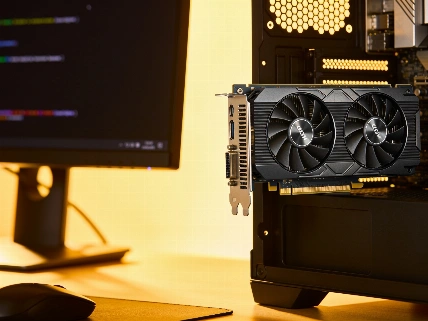
Evolutionary computation designed a silicon chip without direct human input
A five-year project led by Conor Ryan produced a silicon chip designed through evolutionary computation and fabricated in 2024. The work shows how genetic programming can tackle engineering problems without people specifying every solution.
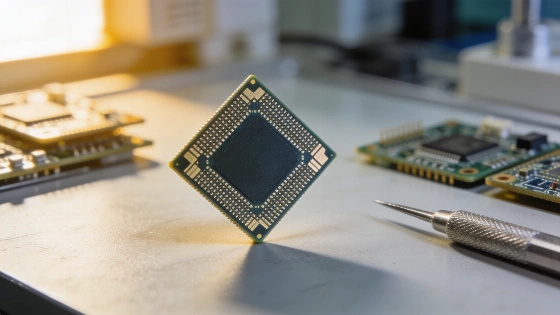
Five years of work reached a physical milestone in 2024: a team led by Conor Ryan had a silicon chip fabricated from a design created through evolutionary computation. The team called it a world first, with the circuit designed without engineers specifying its layout directly. Ryan discussed the project and his wider research in an interview with SiliconRepublic.com.
A chip that works in simulation is one thing. Holding the manufactured result is another. Earlier evolutionary-hardware research had explored circuits shaped by the physical properties of silicon, including Adrian Thompson's 1996 paper on an evolved circuit intrinsic to silicon. Work in the field also extended to circuit simulation and reconfigurable hardware, approaches distinct from fabricating a physical integrated circuit.
How evolution searches for solutions
Ryan's research centers on evolutionary computation, which uses ideas inspired by natural evolution to help computers find solutions. One approach is genetic programming (GP): instead of writing every instruction themselves, people set up a process that generates candidate programs and evaluates how well they solve a task. Grammatical evolution, introduced by Ryan, J. J. Collins and Michael O'Neill, uses a variable-length genetic representation and a formal grammar to map candidate representations into complete programs.
Selection steers the search. Useful traits carry over into later generations, where new candidate programs are produced. Randomness plays a part, but the process is guided by how well each candidate performs against the problem being tackled.
In 1998, Ryan, Collins and O'Neill published "Grammatical evolution: Evolving programs for an arbitrary language" in the proceedings of the First European Workshop on Genetic Programming, held in Paris on 14-15 April. The paper appeared on pages 83-96 of volume 1391 of Springer's Lecture Notes in Computer Science. Its grammar-based mapping lets the search generate complete programs within rules set by a formal language, without specifying the final answer in advance. The 1998 grammatical evolution paper established a methodological foundation for Ryan's later work applying evolutionary computation to circuit and hardware design.
One ongoing project, AutoCircuit, applies evolution to electronic circuit design. Ryan's background is in computer science, so the work brings him together with electronic engineers. He has also used the approach to evolve dance routines for two small Khepera robots, a project that required him to learn Labanotation, a system for recording movement and choreography.
Different ways to approach engineering
The chip project illustrates the gap between an algorithmic design and fabricated hardware. Ryan's team spent five years developing ways to automate circuit design before the finished chip arrived. The result depended on collaboration between researchers in evolutionary computation and electronic engineering. Automated circuit design was already a recognized research area by the early 2000s: ACM catalogues the December 2001 book Evolutionary Electronics: Automatic Design of Electronic Circuits and Systems by Genetic Algorithms.
Ryan's work has also included biomedical research. With biomedical engineers studying blood flow through vascular bypass grafts, his team used an evolutionary system to generate mathematical expressions that modeled experimental blood-flow velocity data. The results were comparable with established approaches, even though the system was not given detailed knowledge of the underlying physics.
That finding does not show that a computer outperformed the biomedical engineers. It shows how an evolutionary method can approach a problem from a different angle. Ryan's broader aim is to find solutions that human experts might not have considered.
That distinction matters in AI research, too. A report on AI algorithm claims discusses possible consequences for complexity theory while noting that the proofs still matter.
AI is broader than today's best-known tools
Ryan says a common misunderstanding is that evolutionary computation amounts to random trial and error. He also pushes back on the idea that AI now means neural networks or large language models. Alan Turing explored ideas related to evolutionary approaches to machine intelligence in the 1940s, though the computing power to put them into practice was not yet available.
"ChatGPT didn't invent artificial intelligence. Some of us were having arguments about it long before ChatGPT came along!" Ryan told SiliconRepublic.com.
SiliconRepublic.com describes Ryan as a professor of machine learning at the University of Limerick (UL) and deputy director of Lero, the Research Ireland Centre for Software. His interest in computers began with a Sinclair ZX81 and led him to study computer science before completing a PhD.
For Ryan, the appeal is partly the surprise of seeing what a search process produces. "And sometimes what evolution produces is completely bizarre. That's part of the fun."