NVIDIA RTX Spark Brings Large-Model AI to Windows ARM PCs
Microsoft's Surface Laptop Ultra combines NVIDIA's RTX Spark SoC with up to 128GB of memory for local large-language-model inference. Planned systems from other manufacturers could end Qualcomm's near-exclusive position in Windows ARM PCs.
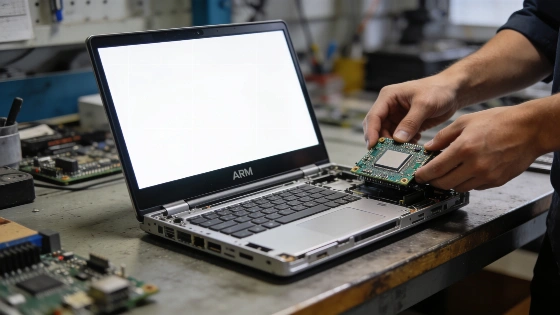
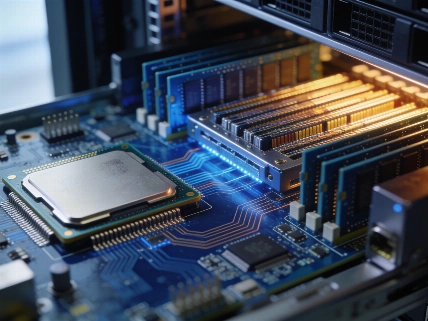
The Surface Laptop Ultra can be configured with up to 128GB of memory, giving its NVIDIA RTX Spark platform room to handle local large-language-model inference. The system pairs a Blackwell GPU with Cortex-X925/A725 cores in configurations of up to 10 cores. NVIDIA describes the broader RTX Spark platform as combining a Blackwell RTX GPU with a Grace CPU, up to 128GB of unified memory, the CUDA software stack, ray tracing and DLSS 5. The shared memory pool is accessible to the CPU and GPU. NVIDIA positions the platform for AI development, content creation and gaming in slim laptops and compact desktops.
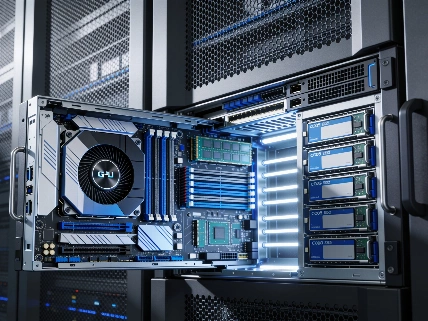
That hardware marks a shift for Windows on ARM64. Qualcomm's Snapdragon line had effectively been the only choice for Windows ARM PCs, but Microsoft has now unveiled a Surface built around NVIDIA silicon. Microsoft identifies the business model as a Surface Laptop Ultra powered by "all-new NVIDIA silicon" and also lists a compact Surface RTX Spark Dev Box for developers.
Why Windows ARM is opening up
A single SoC architecture made Windows driver development easier and shortened porting work. It also reduced the support burden for PC makers. Those technical advantages do not fully explain why Snapdragon remained the fixed target for Windows 10 and Windows 11; the source describes a possible business relationship between Microsoft and Qualcomm.
Qualcomm's reach extends beyond Windows. Snapdragon has also been adopted for Googlebook, while the combined market for non-Windows smartphones, tablets and PCs far exceeds Windows PC volumes. That broader market can make general-purpose AI inference hardware an attractive target, especially where hardware development barriers are relatively low.
Microsoft introduced Copilot+ PC in 2025, positioning its high-performance NPUs for local inference and offline AI. Dell describes the Copilot+ PC threshold as an NPU rated at 40+ TOPS, with at least 16GB of memory and 256GB of storage; its guide lists Recall, Cocreator and live translation among the advanced on-device Windows features associated with the category. Those systems are described as suited to small and medium-sized language models. RTX Spark machines target larger models, creating a higher-performance tier for developers and creators. CUDA, ray tracing and DLSS 5 support workloads beyond language-model inference, including neural rendering and AI-generated game characters.
Local inference and the cost of AI
Windows 11 hardware now falls into distinct AI capability levels. A conventional PC has no AI hardware and handles general-purpose work. Copilot+ PC uses an NPU for lighter offline inference. RTX Spark-equipped systems are aimed at running large language models locally, with NVIDIA advertising up to 128GB of unified memory for the platform.
Demand is not guaranteed: Copilot+ PCs have received an unfavorable market response. Still, the source expects some interest from developers and creators because it describes RTX Spark systems as offering performance without a substitute in that role. Microsoft's broader move also comes as cloud inference costs rise with usage, a pressure shared by companies providing AI services.
Moving more inference onto devices could reduce some cloud processing, while larger sales volumes may lower SoC costs over time. NVIDIA reported that RTX Spark laptops from ASUS, Dell, HP and Lenovo became available on October 17, 2026. The platform supports native Arm64, emulated x64 and Arm64EC Windows applications. NVIDIA's Nsight Graphics 2026.3 has a Windows-on-Arm installer, while Nsight Systems 2026.5 uses a unified installer. Other OEMs are expected to offer RTX Spark-powered machines, and a notebook from ASUSTeK Computer has surfaced. NerdsMagazine has separately covered NVIDIA's Windows driver policy in a related report.
Topics: