iPhone 20 Pro camera may get a major sensor upgrade
A report from Weibo leaker Ice Universe says the iPhone 20 Pro may use a 17-nanometer process for its main camera sensor's logic circuitry. The change could improve readout speed and efficiency without confirming a larger sensor.
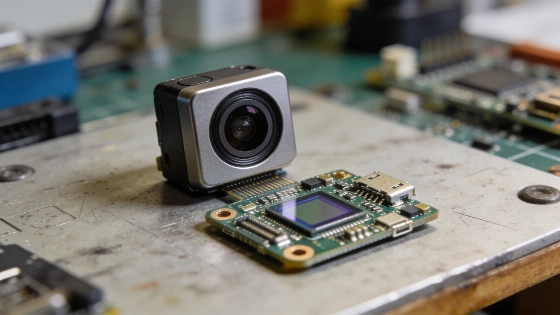
A faster sensor readout could help a phone preserve detail when bright skies and deep shadows appear in the same frame. On November 16, 2026, Weibo leaker Ice Universe reportedly said the iPhone 20 Pro's main camera sensor may use logic circuitry manufactured on a 17-nanometer process, a claim reported by 9to5Mac.
The distinction matters: that process would apply to the sensor's logic circuitry, not necessarily to the imaging area itself. Modern stacked CMOS sensors separate the light-sensitive pixel layer from a logic layer that reads pixel data and handles associated processing. The 17nm figure does not describe pixel size or confirm a physically larger sensor.
What faster readouts could change
Phone cameras often capture a rapid series of frames and combine them into one image. If the sensor reads data faster, the iPhone 20 Pro could have more scope to capture and merge exposures in challenging light. Highlights might retain more detail while darker areas appear clearer. A more advanced logic process could also support faster processing or lower power consumption, though the reported specifications do not quantify those effects.
That could also matter for moving subjects. Faster readouts may help reduce rolling shutter distortion and improve responsiveness when photographing action. The source points to sports and fast movement as situations where a moment can easily turn out blurred or out of focus.
A comparison of the iPhone 18 Pro Max and iPhone 17 Pro Max described in the report found that most snapshots looked nearly indistinguishable. That experience helps explain the interest in a more substantial camera change, though the rumored process alone does not establish how much image quality would improve.
Efficiency is not a guarantee of cooler recording
A more power-efficient sensor could reduce some of the demands of sustained video capture. The report raises the possibility of longer ProRes recording sessions without an overheating pause, but it offers no test results or confirmation that the phone would avoid heat-related limits. Faster readout is also discussed as a potential way to reduce rolling-shutter distortion, not as a measured improvement for this phone.
Elsewhere in Apple's iPhone development, testers in mainland China have reported mixed results in iOS 27.3, including Qwen login failures and battery drain.
Reports connect the rumored iPhone 20 Pro with a possible 2027 20th-anniversary iPhone generation. The name and launch timing remain part of the speculation: Apple used the iPhone X branding for its 10th-anniversary generation, but has not announced the name or schedule for a future anniversary model. Ice Universe's report identifies a 17-nanometer process for the logic circuitry; it does not confirm a larger camera sensor.