
Google rolls out SynthID Detector worldwide to spot AI-made content
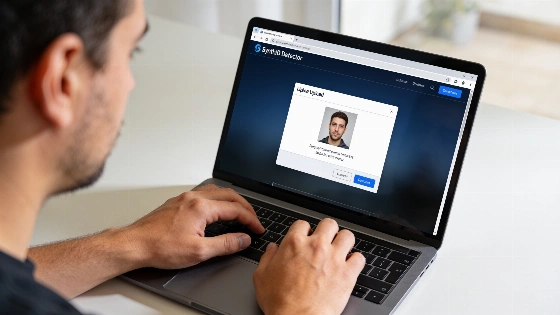
Google has opened up its SynthID Detector to the public, letting people everywhere check if an image, video, or audio file was made by artificial intelligence. The launch comes as tech companies face growing demands to tackle deepfakes and AI-driven misinformation.
This is the first time SynthID Detector works beyond Google's own platforms. The tool now picks up invisible watermarks from AI models built by Google, OpenAI, Nvidia, and Kakao. Support for Apple Intelligence is on the way. With this update, users no longer have to bounce between different sites to verify content from various AI providers.
To use the public SynthID Detector, users must sign in with a Google, OpenAI, or Apple account, ensuring secure access and accountability.
How SynthID Detector works
To check a file, users upload an image, video, or audio clip to the SynthID Detector website. The tool scans for a digital watermark called SynthID. This marker is built right into the pixels or audio waveform, so people can't see or hear it, but software can. Unlike regular metadata, which often gets wiped out when files are edited or posted online, SynthID stays inside the content. The detector works with dozens of common formats, including JPG, MP4, and WAV.
Google says SynthID has already been added to more than 180 billion images and videos, plus audio equal to 240,000 years of listening time. The detector now handles about 1 million requests every day. That's a huge jump from the 10 billion watermarked files reported when the portal first launched. According to an official Google announcement, SynthID is also built into Gemini, Google Search, and Chrome, where these features process over a million verification checks daily.
Limitations and industry context
SynthID Detector has its limits. It only works on content that carries a SynthID watermark. Files made by companies that don't use SynthID-like Meta or Microsoft-won't be flagged. A negative result doesn't prove a file is authentic. The tool can't tell the difference between fully AI-made content and real media that's been touched up with AI. If a file is heavily edited, cropped, or compressed, the watermark might not show up. Google admits SynthID can't always beat determined tampering.
This global launch comes as governments push for clear labeling of AI-made content. The European Union's AI Act, new rules in China, and state laws in the US all aim to force more transparency. By teaming up with OpenAI, Nvidia, Kakao, and soon Apple, Google is trying to make SynthID the go-to standard for watermarking synthetic media.
SynthID watermarks are embedded directly into images, audio, or video and can survive some modifications, unlike C2PA metadata, which stores provenance information in standardized Content Credentials. OpenAI confirms that for its content, SynthID acts as an additional provenance signal alongside C2PA, but the presence or absence of C2PA data does not replace the need to check for the embedded watermark.
Transparency in the age of deepfakes
The stakes are high. AI-generated deepfakes, fake photos, and cloned voices are fueling scams and political hoaxes on a scale never seen before. New AI voice tools can copy laughter, emotion, and natural pauses, making it tough for most people to spot a fake. Pushmeet Kohli, vice president of science and strategic initiatives at Google DeepMind, has called content transparency a "complex challenge" as generative AI keeps advancing.
SynthID isn't the only tool out there. The Coalition for Content Provenance and Authenticity (C2PA) is pushing a metadata-based standard called "content credentials." Google, OpenAI, Microsoft, and Adobe are all members. Experts quoted in the source material say no single method will solve the problem. Watermarking and provenance tools work best when paired with media literacy and other ways to check content.
Anyone can now use SynthID Detector for free on the web by uploading files to check for watermarks. Google has also released its SynthID text watermarking tech as open source for developers. For now, the detector only works in English, and Google hasn't said when other languages will be added.
With SynthID Detector now available worldwide, Google is ramping up the push for AI content transparency. The tool isn't perfect, but its reach and industry partnerships put it in the running to set the watermarking standard. Whether other tech giants and regulators will back a single system-or if the fight against synthetic media stays scattered-remains to be seen.