
Safeworld lands $12M to hunt hidden dangers in human-robot teamwork
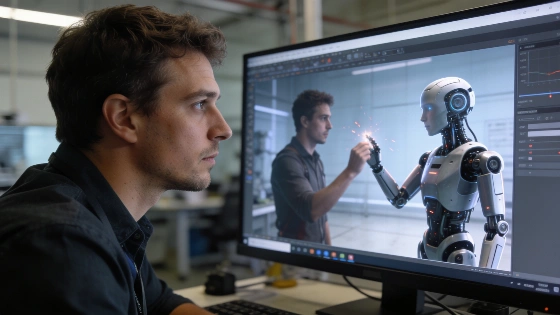
Robots are showing up in offices, warehouses, and public spaces faster than safety teams can keep up. Most companies still miss the rare, dangerous failures that slip through standard tests. Safeworld thinks it has a fix. The startup is betting on digital humans and advanced simulation to catch the mistakes that could put people at risk.
Safeworld's seed round was led by Shine Capital and a16z Speedrun, with additional backing from Box Group, Carnegie Mellon University Endowment, Innovation Endeavors, and SV Angel.
How Safeworld tests robots before they meet people
Safeworld's tech is built for companies rolling out robots in places where people work or move. The platform creates digital humans and runs thousands of simulations. These tests reveal scenarios that would never show up in a normal lab. According to a TechCrunch report, Safeworld runs these scenarios in virtual copies of real spaces. This gives a deeper look at how robots might fail in the wild.
The team is small but brings serious experience. Dr. Ding Zhao, co-founder and head of the Safe AI Lab at Carnegie Mellon University, leads the group. He works alongside Kyle Wong and Simo Rachidi. Safeworld started in either 2025 or 2026. Right now, the company has about six employees.
Funding details and what comes next
Safeworld came out of stealth on October 5, 2026. Its seed round topped $12 million. TechCrunch did not report the exact total or company valuation. Shine Capital and a16z Speedrun led the round. Box Group, Carnegie Mellon University Endowment, Innovation Endeavors, and SV Angel also joined. The money will go toward building out the simulation platform and growing real-world testing partnerships.
a16z Speedrun, which participated in Safeworld's seed round, publicly states that it invests up to $250,000 in early-stage startups, providing context for the accelerator's involvement in the deal.
With a lean team and strong backers, Safeworld is set to shape how the industry thinks about risk in human-robot work. The big question remains. Can simulation-driven safety keep up as physical AI systems spread fast?