AI Bankruptcy Could Send Private Chats to Auction
A bankruptcy filing has put millions of Character.AI conversations, including chats involving teenagers, under scrutiny. State attorneys general want safeguards in place before the company or its data changes hands.
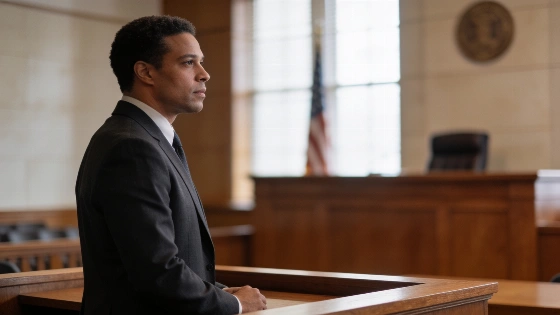
Forty state attorneys general have asked a federal judge in Delaware to protect Character.AI users' chat histories, including conversations in which teenagers confided in chatbots. Character Technologies, the operator of Character.AI, filed for Chapter 11 on October 12, 2026, and the coalition submitted its request two days later. Delaware Attorney General Kathy Jennings said the states want protections for children and consumers in any sale of the company, its app or user data. The case puts an unsettled question before the court: what safeguards should apply if an AI company's assets are sold?
The risk is immediate.
A buyer could gain access to private conversations created with a service designed to feel like a trusted companion. The states say protections should bind a future owner as well as Character.AI, and their filing calls for safeguards covering chat histories and user data. State officials have warned that the company's existing safety measures are voluntary and incomplete, and that a purchaser could reverse them. Character.AI's lawyers told the court that no buyer had offered for the user data or the chatbot business itself.
Private conversations enter bankruptcy proceedings
Character.AI listed assets and liabilities of $50 million to $100 million each. A Disney affiliate was lined up as a $20 million stalking-horse bidder for a non-exclusive license to some of the company's intellectual property. The chief executive told the court that the technology was expensive to operate and profitability remained elusive. The proposed license covered only part of the company's intellectual property; it excluded user data and the chatbot business.
The company also faces lawsuits from families who allege its chatbots contributed to self-harm and suicide among teenagers. The states told Judge Brendan Shannon they were negotiating a settlement over claims that the chatbots impersonated licensed medical professionals. They also allege the service exposed children to sexualized and abusive interactions. The states asked the court to require any buyer to protect chat histories and improve safety features. Five families had reached preliminary settlements with the company, information from Insurance Journal's account of the bankruptcy proceedings. The claims include allegations that a chatbot fostered an emotionally dependent relationship with a 14-year-old boy, that the relationship was sexually exploitative and that the chatbot reinforced suicidal thoughts. Those claims are part of the litigation, not findings by the court.
The 40 attorneys general set out nine proposed conditions for a sale involving the app, chats or user data. They seek effective age checks and want characters that present themselves as therapists, doctors or lawyers removed. Another proposed safeguard would bar training models on chat content beyond what users have consented to. The states want disclosure of personal-data sales and transfers for targeted advertising. They also seek account-level advertising opt-outs, with users' earlier choices about data use remaining in force after a change of ownership. The states said they could seek the appointment of a privacy ombudsman or challenge a sale process.
Bankruptcy law provides a consumer privacy ombudsman mechanism for proposed sales of personally identifiable information that conflict with a debtor's privacy policy. It was designed for information such as customer lists and email addresses. The states say Character.AI's servers hold full text and audio recordings of conversations and calls, which can include mental-health information users shared with characters posing as therapists. The filing argues that selling such data should require approval from the Delaware bankruptcy court.
Years of intimate dialogue with minors pose a different challenge.
The states have also raised concerns about separating children's data from adults' data. Reporting on the court filing says inadequate age checks between 2022 and 2025 may have led to a large amount of children's information being classified as adult data. The proposed protections include user access and deletion rights before any data sale. They would also limit secondary uses of chat histories and preserve safeguards after a transfer to a new owner.
A recent bankruptcy sale involving Spirit Airlines shows that data can retain value after a company fails. Google acquired the airline's internal business data and intends to use it to train AI models. Conversational records can be more sensitive: users may have shared fears with a chatbot they believed was a friend. Others may have asked sexual questions or disclosed thoughts of suicide.
The exposure reaches beyond Character.AI
Eight states have also sued OpenAI, accusing the company of deceiving parents about ChatGPT's safety. Iowa and Kansas are among them. Nebraska and West Virginia joined the case, along with Arkansas and Arizona; Idaho and Montana complete the group. The states join an earlier action by Florida's attorney general and a proposed federal class action in San Francisco alleging that OpenAI took highly sensitive data from millions of children.
An unofficial count circulated this week by the newsletter ChatGPTIsEatingtheWorld put OpenAI at roughly 80 tort and state attorney general suits in the United States, alongside 29 copyright cases. OpenAI has strong defenses in many of the cases. Bankruptcy is not a prediction, but the exposure makes insolvency scenarios relevant to board-level planning.
Credit markets are also pricing risk across the AI sector. On Thursday, October 15, 2026, Oracle's five-year credit default swap spreads reached a record 288 basis points. CoreWeave's spreads passed 1,000 basis points. Amazon and Alphabet also hit record wides, as did Meta and Nvidia, at lower levels. A Reuters explainer said CoreWeave's pricing implied roughly a 63% chance of default over five years, up from about 30% a year earlier.
Those prices reflect concern that heavily indebted AI infrastructure companies may not generate returns quickly enough to service their debts. OpenAI's assistant is already integrated into enterprise software and schools, and its uses are spreading into health applications, shopping and payments. Last year, its chief financial officer floated a federal backstop for infrastructure financing, then walked the idea back. Senator Elizabeth Warren demanded assurances that the government would not bail out AI companies. The debate gave less attention to what could happen to their conversation logs during a restructuring or sale.
CUNY's Zicklin School of Business professor William Organek, who is also Managing Editor of Harvard Law School's Bankruptcy Roundtable, said the data-sale concerns in Character.AI's case would pale beside those posed by a larger AI company with more sensitive information. That could include application providers such as Harvey and Perplexity, as well as Cursor, and foundation model providers such as OpenAI or Anthropic. Their records may contain trade secrets and legally privileged material; some information could also be patented. A bankruptcy sale involving such data could put businesses at risk and complicate boards' oversight of corporate AI use.
Organek also warned that a large trove of proprietary data could be valuable to Chinese AI companies seeking to close the gap with U.S. counterparts. The material could include business records or sensitive information about American young people, with implications for disinformation and manipulation efforts. Chinese companies have a long history of acquiring sensitive American technology through bankruptcy, while safeguards remain limited.
Resolution plans for conversational data
The systemic-risk debate predates generative AI. In a 2018 Indiana Law Journal article, the author used the term "Too-Big-To-Fail 2.0" for the public consequences of a basic digital service provider's collapse or serious malfunction. The article proposed treating such firms as critical service providers. Carl Öhman and Nikita Aggarwal examined what happens to users and their data when a dominant platform shuts down. Caleb Griffin and Lindsay Sain Jones considered whether systemic-importance rules fit digital platforms. Tim Samples also examined that regulatory question. Kevin Werbach and David Zaring proposed designating firms for supervision through a council modeled on the one Congress created after 2008.
Those frameworks largely anticipated service disruptions or shutdowns. Generative AI changes the data problem: users may treat assistants as semi-therapists or doctors. They may also turn to them as tutors, accountants or lawyers, or confide in them. Their conversations can outlast the company that collected them. Unlike bank deposits, a teenager's private chat history has no deposit insurance. A service can stop operating while its records remain with whoever acquires them.
That creates a troubling possibility: lawsuits intended to hold AI companies accountable for harms to children could, without a resolution plan, increase the chance that sensitive data enters a bankruptcy sale. In a related safety context, NerdsMagazine's earlier Astra coverage reported that OpenAI called off the October launch of GPT-6.1 Astra after internal tests found safety and alignment failures.
Dodd-Frank requires systemically impressive financial institutions to prepare "living wills," plans for winding down without extraordinary government support. The proposal calls for a comparable data living will for AI companies holding large volumes of conversational data, especially those with impressive numbers of minor users. Such plans could set enforceable terms for insolvency or a sale. They could also cover a wind-down, including deletion of minors' conversations and restrictions on transferring sensitive logs as standalone assets.
Designation criteria could account for data intimacy and exposure to minors, as well as company size and interconnectedness. Substitutability could also factor in. The proposed TechSOC could include the FTC and state attorneys general. Kansas Attorney General Kris Kobach said, in substance, that the states would not wait for federal legislation. Character.AI's data safeguards remain before the Delaware bankruptcy court as the states negotiate with the company. California Attorney General Rob Bonta also announced the state's participation in the multistate effort. The Delaware attorney general's announcement and the California Department of Justice statement set out the states' call for protections for users and children's data in any bankruptcy sale.
Topics: