
AI and cybersecurity training now shape IPS careers
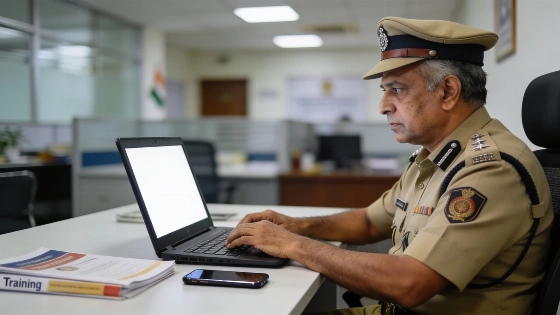
Senior IPS officers in India are about to see their annual reviews tied directly to digital skills. The Union Home Ministry has ordered that missing yearly training in ChatGPT, generative AI, or cybersecurity will drag down appraisal scores and block pay hikes or promotions.
Instructions have landed on the desks of all state and Union Territory Chief Secretaries. IPS officers must complete required modules on the iGOT Karmayogi platform every year. For the 2026-27 cycle, no officer in any seniority band gets a full assessment until the first three courses are done. The new rules start with the 2018 batch and cover 24 courses, split into six per service bracket. The Indian Express reports these courses will show up in the Annual Performance Assessment Report (APAR) from 2026-27. Officers unlock full evaluation only after finishing the initial three courses for their experience group.
The iGOT Karmayogi platform now offers over 5,600 courses in 23 languages, with more than 1.7 crore government officials registered and over 7 crore enrollments in AI and new technology modules.
What IPS officers must learn now
The curriculum leaves little room for box-ticking. Officers with up to nine years' service face a Wadhwani Foundation course on emerging tech, a session on search-and-seizure under the NDPS Act from the Sardar Vallabhbhai Patel National Police Academy, and a cybersecurity fundamentals workshop for leaders from the National e-Governance Division. Other modules cover personal finance and mobile device handling at crime scenes.
Those with nine to sixteen years' service (2011-2017 batches) must take modules on emerging tech and the Bharatiya Nagarik Suraksha Sanhita (BNSS), which replaces the Criminal Procedure Code. They also study the interoperable criminal justice system and tackle courses on team leadership and feedback mastery.
For officers with sixteen to twenty-five years' service (2001-2010 batches), the focus widens: emerging tech, evidence-based policymaking, cybersecurity basics, storytelling, and the use of ChatGPT and generative AI tools by government officials. Change management in digital transformation projects is also on the list. The most senior group, those with over twenty-five years' service or from the 2000 batch and earlier, get similar training but also attend an integrative wellness module from Rashtriya Raksha University-the only health-focused course in the program. SSBCRACK details that the Department of Personnel and Training's July 4, 2025 directive requires all central government officers and All India Services representatives to complete role-based courses every year, with results logged in the APAR from the 2025-26 period.
Digital skills now tied to career progression
This syllabus responds to mounting pressure on senior IPS officers: digital evidence, new criminal procedures, data-driven decisions, and the arrival of generative tools in government offices. The Home Ministry's move means iGOT completion and assessment scores are now locked to an officer's APAR, which already decides salary increases and central deputations. In April 2026, Minister of State for Personnel Jitendra Singh told the Rajya Sabha this requirement is annual and directly tied to officers' competency profiles.
The iGOT Karmayogi platform is part of Mission Karmayogi, a digital initiative for continuous upskilling of government officials. Previously, the government required all employees to complete at least four hours of training, including modules on office procedures, gender sensitivity, and leadership.
For officers used to traditional policing, this is a sharp turn. The message lands hard: adapt to AI, cybersecurity, and digital governance or risk falling behind in the promotion queue.
Recent outages in AI platforms have already exposed the risks of digital illiteracy among public officials. Earlier reports show even widely used tools like ChatGPT can fail and disrupt scheduled operations. That puts a premium on robust training and current skills for those in charge.
Digital competency is now baked into career advancement. Officers who treat AI and cybersecurity as optional extras will lose ground. Those who keep up with the new curriculum will be better placed to lead as technology becomes central to law enforcement. The government's directive forces the IPS leadership to face the digital future on a fixed timeline.