
SkySafari 8 and Sky Tonight shake up Android stargazing apps
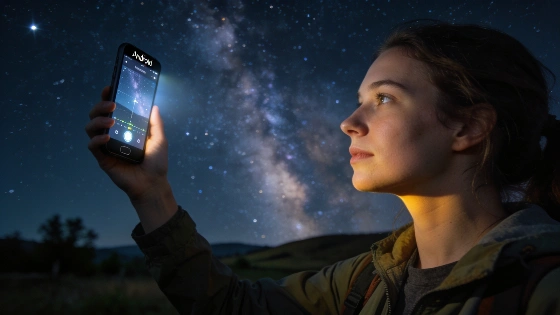
March 2026 brought a big change for Android stargazers. SkySafari 8 finally launched on the platform. For years, iOS users had the edge. Now, Android users have a serious tool for the night sky. The app packs a huge database, plate solving, and solid telescope control. It's the new standard for advanced users. But it comes at a price.
Comet 220P/McNaught experienced two major outbursts in 2026, with its brightness peaking at 6.4 magnitude in August before fading rapidly by late September.
Sky Tonight has jumped ahead for beginners and casual users. It's the best-maintained free guide right now. AR pointing, an event calendar, and comet tracking-updated in August 2026 for Comet 220P/McNaught-keep it current. The app's visible-tonight list and image annotation tools help with quick skywatching. Ads in the free version are a pain. But the app stays useful even if you don't pay.
Some older apps are gone. Night Sky (iCandi) is now only on iOS. It vanished from Google Play. Star Chart hasn't updated since April 2024. Paid upgrades broke for many users. The Astronomy Magazine Android app is dead. "Sky View Free" was just a copy of SkyView Lite. Only apps with recent, proven updates matter in 2026.
By late September 2026, astronomers noted that both 220P/McNaught and 161P/Hartley-IRAS had faded to the point where only large telescopes under dark skies could visually detect them, with photographic detection requiring apertures of 200 mm or more.
SkySafari 8 Pro stands out for telescope owners and deep-sky hunters. It holds a database of over 46 million stars and hundreds of thousands of deep-sky objects. The GoTo mount control is the best on Android. Tap an object, and your telescope slews to it over Wi-Fi. The Pro version costs US$49.99. That's steep for casual users. But for serious observers, nothing else matches it.
Stellarium Mobile's free version is not a crippled demo. You get real star colors, constellation art from different cultures, and accurate planet positions. It's the top pick for anyone who wants to know what's overhead without spending money. The Plus upgrade unlocks the full Gaia catalogue and telescope control. Most people won't need it.
Sky Tonight updates its event alerts and comet tools more often than any rival. Its AR view is simple and easy to use. Beginners get a smooth experience. Advanced users can dig into the event calendar and image annotation. The only real drawback is the ads, unless you subscribe. Still, the free version does the job for most people.
Want more than the basics? Astrospheric's weather planning and ISS Detector's satellite tracking fill key gaps. Light Pollution Map helps you find dark skies. My Moon Phase and NASA App round out the toolkit for those focused on the Moon or space missions.
For most, Stellarium Mobile or Sky Tonight will cover nearly everything. Only when you need more-like advanced telescope control, weather planning, or satellite tracking-does it make sense to add SkySafari 8, Astrospheric, or ISS Detector. The sky is still free. So are the best tools, until your curiosity pushes you further.