
Reddit users question ChatGPT's gas hose advice for a 70-foot generator run
The owner is leaning toward a 3/4-inch line despite replies recommending a 1-inch hose or moving the generator closer to the gas meter.
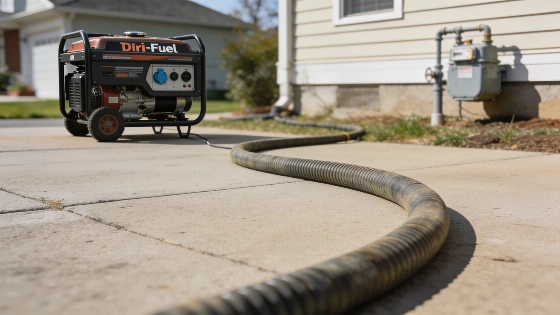
The planned route from the home's natural-gas line to a Westinghouse 9500 TriFuel generator is about 70 feet.
The owner turned to ChatGPT while trying to avoid repeatedly filling a gasoline tank. According to the Reddit post, ChatGPT advised that a half-inch hose over that distance would not let the generator reach full load. The owner was buying the hose and fittings; a friend would make the connection near where the gas line emerges from the ground.
The WGen9500TF is marketed as a tri-fuel portable generator that runs on gasoline, propane or natural gas. The listed gasoline output is 12,500 peak watts and 9,500 running watts; on natural gas, the rating is 9,500 peak watts and 7,500 running watts. The unit is listed with a 457-cubic-centimeter engine, 240-volt output and a 6.6-gallon gasoline tank, according to an Amazon product listing. A Sam's Club listing describes the WGen9500TF as a remote-electric-start model with a carbon-monoxide sensor and identifies its 12,500/9,500-watt rating as peak and running output.
Commenters favored a larger hose or shorter run
The top-voted response in r/Generator recommended a 1-inch hose or placing the generator by the gas meter and running longer electrical. The commenter wrote: "70 feet is a very long run for gas, you'd probably need to go to 1". You would be better off putting the generator by the gas meter and running longer electrical." The response also linked to a natural-gas pipe sizing chart.
The owner said the home's gas and electric connections are on opposite sides, and planned to place the generator in a covered driveway between them. That arrangement would leave both connections a long way from the generator.
Fittings were another unresolved detail. The generator had a male connector attached, which the owner tentatively identified as a half-inch quick connection. Commenters also disagreed about whether the gas meter could handle the generator; some said it would be fine.
Fuel-line sizing depends on the appliance demand and the complete piping arrangement, including the run length, fittings, regulator capacity and allowable pressure loss. Guidance for generator fuel piping also treats correct pipe sizing and an approved flexible fuel connection as separate requirements. A connector's diameter alone does not establish that the full installation is suitable.
The owner's cart still listed a 3/4-inch line
In an update, the owner shared a picture of an Amazon cart and said the actual plumbing and fittings would come from the friend. The proposed sequence included a 3/4-inch valve, quick connector and hose, followed by a 3/4-inch flare-to-half-inch quick-connect adapter for the generator.
"Here's what I have in my cart so far (the plumbing and actual fittings will come from my buddy - this is only hose stuff)," the owner wrote. "I'm thinking 3/4 Valve -> 3/4 quick connector -> 3/4 hose -> 3/4 flare to 1/2 quick connect female -> generator male. Not sure if the 1/2 on the generator is going to be a bottleneck."
One commenter said most of the listed items looked suitable from memory, but the owner would need the right adapter: "Just going by memory but I think most of the stuff you have in your cart will work. just need the right adapter," they wrote. The owner appeared set on the 3/4-inch line despite the recommendations for 1 inch.
The generator's natural-gas rating is 7,500 running watts, compared with 9,500 running watts on gasoline. The WGen9500TF's electrical wattage ratings do not specify the gas-line diameter needed for a 70-foot installation; that sizing involves the full fuel system and must account for compatible, appropriately rated components.










