
OpenAI Brings Free ChatGPT Plus Research Grants to India
OpenAI is offering eligible academic researchers in India 12 months of ChatGPT Plus for teams of three. The application page is closed, and company announcements give different dates for the next round.
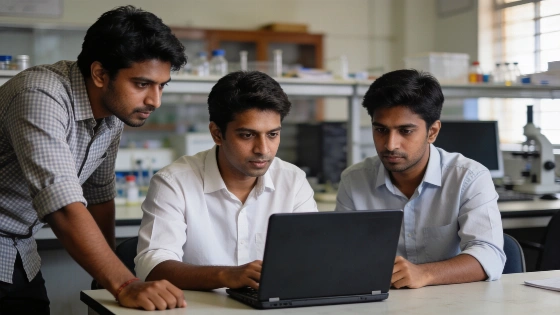
Each grant covers a three-person team for 12 months, while OpenAI's broader program aims to reach 200,000 people. The India offer extends that access to eligible academic researchers, but only approved applicants qualify. OpenAI announced the India expansion on November 16, 2026, as part of its effort to equip scientists with AI tools for literature review and hypothesis development, as well as work involving evidence analysis, coding or manuscript preparation, according to its academic researcher announcement.
Faculty members and postdoctoral academics at supported institutions may apply. Applicants need relevant research published within the past three years, along with verification of their institutional affiliation. Qualifying papers must have appeared on arXiv, bioRxiv or ChemRxiv. Students can join as collaborators, but they cannot lead an application. The program targets research in science and engineering, including mathematics. Applicants must describe their research and intended use of ChatGPT.
Grant capacity is not enrollment
The wider expansion includes 50,000 grants for qualifying applicants, awarded on a first-come, first-served basis. Each grant comes with three ChatGPT Plus seats in a shared research workspace, creating potential capacity for 150,000 researchers. OpenAI's 200,000-person figure is a program target, not a count of people already enrolled. The company says 20,000 researchers across 33 countries have joined since the program launched in July.
The new awards provide Plus rather than Pro, which pilot participants received. OpenAI says its review found that most pilot participants would not have exceeded Plus limits. Existing awards retain their own terms. The change does not establish that previous recipients have been moved to Plus. OpenAI's separate workspace coverage examined a proposed ChatGPT tab merger and shared usage for paid plans, a different change from these academic grants.
Dates and research claims remain qualified
OpenAI's global notice dated November 16 says the next round opens November 23. PTI's India report on November 17 cites November 30 from the company's statement. OpenAI's notice says applications for the global round are first-come, first-served, while Indian coverage describes the same 50,000-grant round and 12-month term. The help page does not resolve the discrepancy, and workspace access is limited to eligible colleagues at the same institution.
In a study of 1,819 researchers, OpenAI found that reading and writing were prominent uses, alongside coding and evidence analysis. Survey participants estimated that comparable work without AI would take about 1.9 times as long. That is a self-reported estimate, not an independent experiment showing that AI speeds scientific discoveries.
OpenAI says research is also constrained by limited staffing and funding, as well as laboratory capacity. Workspace content is excluded from model training by default, but the policy does not promise that data is never retained or accessible to workspace administrators. The help page lists applications as closed and lets visitors join an information waitlist.










