iPhone Duo hinge stays smooth after 11,000 folds in Tim Pan's review
Tim Pan reported a smooth hinge after repeated folding, including tests at minus 4 degrees Fahrenheit, while noting a more visible screen crease. Paytm founder Vijay Shekhar Sharma praised the review and cited 45 million views.
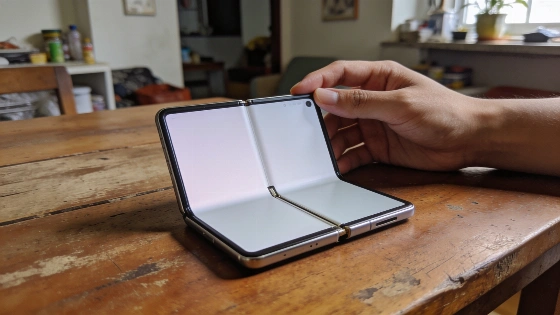
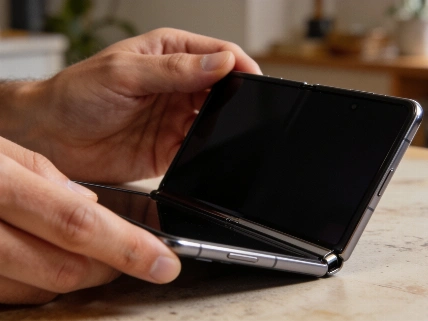
The hinge kept helping open the device as it had on day one, even though the screen crease became more pronounced. That was the basic trade-off in tech reviewer Tim Pan's durability test of Apple's iPhone Duo, as The Verge reported.
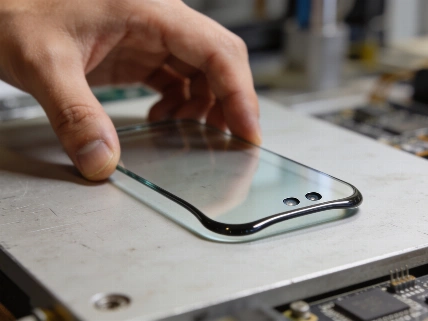
Pan folded the device 10,000 times at room temperature, then completed another 1,000 machine-assisted folds at minus 4 degrees Fahrenheit (about minus 20 degrees Celsius). Those stages made 11,000 machine folds; with 500 earlier manual folds, the full experiment totaled 11,500. Dexerto's coverage described the hinge as still very smooth after the room-temperature and cold-condition sequence. Pan also examined whether dust, hair or sand could enter the hinge at certain angles; his test indicated debris might be drawn into the mechanism.
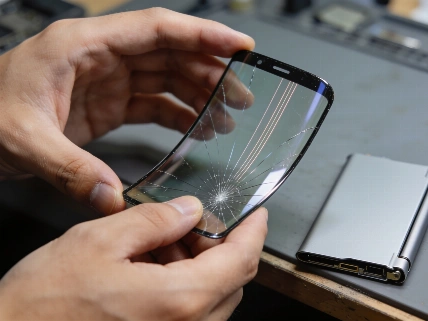
The crease changed. Earlier testing after 500 folds had also made it deeper, though Pan said it was not particularly noticeable by touch or when viewing the display in bright mode. The later test likewise showed a more visible crease while the hinge continued to assist with opening.
What the cold test does and does not show
The freezing-temperature session gives a specific test result, not a general guarantee about winter use. An earlier cold-weather report noted the phone's published operating floor of 0°C and said no independent test in Northern Ontario winter conditions had been identified. Pan's review tested at minus 4 degrees Fahrenheit, but the supplied findings do not establish performance across other cold-weather conditions. The fold sequence was a reviewer's test, not a certified service-life rating.
The review, titled "iPhone Duo Review: 10,000 Folds Later...", also drew a public reaction from Paytm founder Vijay Shekhar Sharma. Sharing his response on X, he wrote, "45 Million views. And a new benchmark for hardware reviews!"
Display and battery findings
Pan described the inner OLED display as slightly smaller than an iPad mini and substantially larger than conventional iPhone screens. The iPhone Duo has a 7.6-inch inner folding OLED display and a 5.4-inch external OLED display; both support adaptive refresh rates of up to 120Hz. The inner screen has a resolution of 1,878 by 2,670 pixels at 430 pixels per inch. It supports reading and watching videos, as well as using applications on a larger display.
The nano-textured surface is intended to reduce reflections and gives the screen a paper-like appearance. Fingerprints and grease can be difficult to remove for some users, and contrast may look lower under strong lighting. Published brightness figures distinguish between about 1,000 nits typical brightness, 1,600 nits HDR peak brightness and a 3,000-nit outdoor peak; that outdoor figure is not the panel's ordinary sustained brightness. Verizon's specifications also list Apple Pencil USB-C support. Pan cautioned against removing the surface layer at home; replacement should be handled by an Apple Store or an authorised service provider.
In a two-hour video-recording test, the Duo retained 61 per cent battery. The iPhone 18 Pro Max had 59 per cent remaining, while the iPhone 18 Pro finished at 45 per cent.
Video playback produced a different ranking. After three hours of watching, the Duo had 84 per cent battery left; the Pro Max retained 93 per cent and the Pro had 87 per cent. Pan attributed the Duo's higher power use during playback to its larger display and greater number of active pixels.
Cameras and charging
Pan found the rear cameras produced clear, sharp photos and videos, though the phone lacks an optical telephoto lens. The foldable design also lets users set the device at different angles for photography or recording without a separate stand.
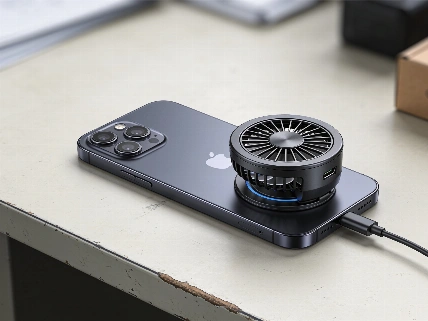
During MagSafe testing, charging peaked at around 36-37 watts. A full charge took approximately 88 minutes.
Topics: