iPhone 18 Pro Max Wins Mobile-Data Battery Test
In one third-party run, the iPhone lasted 7 hours 50 minutes on mobile data. The Pixel finished charging 58 seconds ahead, while the Galaxy's charging session ran unusually long.
At the seven-hour mark, the iPhone 18 Pro Max still showed 21% battery. The Pixel 11 Pro XL was down to 9%, and the Galaxy S26 Ultra had 6%. In the Lover of Tech test, the iPhone kept going for 7:50:03.
ZEERA reviewed this single third-party run but did not conduct the comparison. The iPhone lasted 16 minutes and 53 seconds longer than the Pixel, and 36 minutes and 42 seconds longer than the Galaxy. Based on the reported runtimes, those gaps work out to about 3.7% and 8.5%. They apply to this workload, not to everyday battery life across the board. Separate tests produced different numbers: CNET named the iPhone 18 Pro Max the longest-lasting iPhone in its lab history, while NeoTeo recorded 10 hours 31 minutes for the eSIM version in a practical test, versus 7 hours 46 minutes for the iPhone 17 Pro Max. Those tests used different conditions from the mobile-data run.
Charging had a different winner. Starting at 1%, the Pixel reached a full charge first, in 61:39. The iPhone took 62:37, just 58 seconds longer. The Galaxy needed 67:23. ZEERA's earlier battery coverage discussed the iPhone's battery positioning in a separate context.
What the battery test measured
The reviewer ran the phones continuously on mobile data, with Wi-Fi off. Each stage lasted one hour. The test began with rear-camera recording at 4K/60 fps, followed by X Spaces. TikTok and Instagram Reels came next. The reviewer then played YouTube at 1440p/60 fps, followed by YouTube Music. Subway Surfers was also part of the sequence. Asphalt Legends ran until the phones shut down. All three were set to 60 fps for Asphalt; the reviewer said Samsung also offers a 120 fps option. YouTube Music played with the speaker volume at maximum.
Phone | Runtime | Final temperature
iPhone 18 Pro Max | 7:50:03 | 42.1 °C
Pixel 11 Pro XL | 7:33:10 | 40.2 °C
Galaxy S26 Ultra | 7:13:21 | 38.9 °C
The final temperatures were taken after different runtimes, so they are not a synchronized thermal comparison. The transcript does not fully document brightness calibration, signal strength, battery health or software versions. It also omits ambient temperature. That leaves no way to isolate modem or chipset efficiency from this result.
The iPhone's clearest lead came during social and video use. At five hours, it had 46% left, compared with 30% for the Pixel and 33% for the Galaxy. Seven hours in, the iPhone still had 21% for the final gaming stage. Samsung lost fewer percentage points during the music hour: its reading fell from 33% to 21%. The iPhone went from 46% to 33%, while the Pixel dropped from 30% to 16%.
These are remaining-battery checkpoints, not watt-hour measurements. They cannot establish efficiency separately from battery capacity. Some spoken or auto-captioned figures for stage-by-stage battery loss conflicted with the checkpoint readings, so those figures were excluded.
Other tests show how much the workload can change the result. Tom's Guide recorded 18 hours 27 minutes for the iPhone 18 Pro Max in continuous 5G web browsing, with the display set to 150 nits. The iPhone 18 Pro lasted 16 hours 17 minutes under the same conditions. NeoTeo's practical comparison reported 29 hours 38 minutes of web browsing, 12 hours 4 minutes of video playback and 14 hours 34 minutes of gaming for the iPhone 18 Pro Max. Those browser, video and gaming runs used different conditions from Lover of Tech's mixed-use test.
Published October 12, 2026, CNET's lab assessment combined several scenarios. It included a stress test with games, video and social media, plus a video call. CNET also tested streaming video and charging. During its 45-minute stress test at 50% screen brightness, the iPhone 18 Pro Max and iPhone 17 Pro Max trailed only the iPhone 16 Plus, by one percentage point. CNET called the iPhone 18 Pro Max the longest-lasting iPhone in its testing history. The CNET battery lab review assessed Apple's lineup; it did not repeat the mobile-data scenario covered here.
Wired charging and temperature readings
All three phones began at 1%. The reviewer used Anker charging equipment rated for up to 140 W, enabled Extreme Charging on the Pixel and said Samsung was set to Super Fast Charging 3.0. The adapter's rated output does not show how much power each phone actually received or confirm every negotiated charging profile.
Checkpoint | iPhone | Pixel | Galaxy
15 minutes | 48% | 45% | 37%
30 minutes | 77% | 80% | 54%
45 minutes | 90% | 94% | 81%
60 minutes | 98% | 99% | 95%
Full charge | 62:37 | 61:39 | 67:23
At 15 minutes, the iPhone was at 48%, up 47 percentage points from its starting level. The reviewer reported 51% at 17 minutes. That supports a useful top-up near half, but it does not show an exact 50% charge at the 15-minute mark. The Pixel had moved ahead by 30 minutes and finished first with Extreme Charging enabled. Its 58-second lead over the iPhone is slim; repeated runs would be needed to show whether it holds up.
In a separate 30-minute wired charging test by CNET, the iPhone 18 Pro Max reached 77%, while the iPhone 18 Pro reached 82%. The CNET charging results are a separate measurement from this three-phone comparison.
The reviewer called Samsung's charging unusually slow. They recalled earlier full charges taking around 54-55 minutes, against 67:23 in this run, but did not identify a cause. That earlier timing was a recollection, not a repeat test for this comparison. This result does not establish the Galaxy's best possible charging time or prove a charger, thermal or software fault.
Charging slowed near full. Apple says the final phase of lithium-ion charging slows to help battery longevity. In this iPhone run, going from 77% at 30 minutes to full took another 32 minutes and 37 seconds.
Charging checkpoint | iPhone | Pixel | Galaxy
45 minutes | 33.8 °C | 34.9 °C | 37.4 °C
60 minutes | 31.3 °C | 32.7 °C | 33.3 °C
Full charge | 31.0 °C | 32.9 °C | 34.5 °C
The iPhone had the lowest measured surface temperature at every shared charging checkpoint. These readings do not establish the peak temperature across the full session or the temperature inside a battery. Its 42.1 °C reading came at the end of the longer discharge run. Since the phones stopped at different times, the figure cannot show which would run cooler after an identical gaming period. Surface readings alone do not diagnose overheating.
What the results mean for buyers
For this workload, the iPhone is the strongest fit for people who prioritize mobile-data video and social app use, along with a fast early wired charge. The Pixel finished less than 17 minutes behind it in runtime and won the full-charge race with Extreme Charging enabled. The Galaxy had the shortest runtime in this run. Its unusually slow charging result needs caution as a guide to a normal full charge.
NeoTeo lists an estimated 5,567 mAh battery capacity for the eSIM version of the iPhone 18 Pro Max and 5,391 mAh for the physical-SIM version. Its practical test results apply to the eSIM model, as described in the NeoTeo battery comparison.
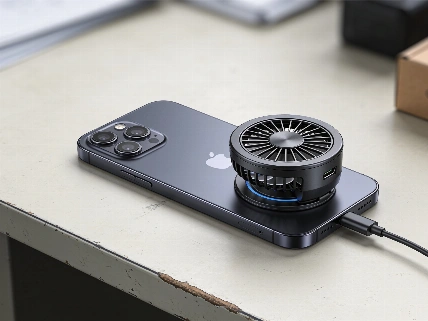
This comparison used cable charging. ZEERA MagTri, SuVolt and an aluminum cooling case were not tested. The 48% checkpoint and 62:37 full-charge time are not promises for wireless charging. ZEERA says its separate 15 W versus 25 W MagSafe test with Qi2.2 cooling uses different conditions and measurements.
The source material does not establish a fixed 5G mode or equivalent signal conditions. It also does not document repeated trials or calibrated thermal measurement positions. The reported checkpoints and timings come from automatically generated transcripts of the Lover of Tech video "iPhone 18 Pro Max vs Pixel 11 Pro XL vs S26 Ultra - Prueba de agotamiento de batería con datos móviles" and its accompanying charging test. The original video contains the creator's measurements. ZEERA supplied the comparisons and buying interpretations.
Topics: