DRDO to Lead Chip Session at ESTIC-2026
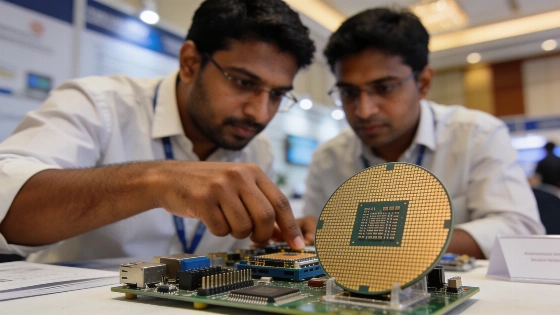
Export controls and global supply disruptions will frame a DRDO-led semiconductor session at ESTIC-2026, scheduled for October 27 to 29 at Bharat Mandapam in New Delhi. DRDO announced the session on October 13. It will bring industry and academic participants together, with indigenous chip developers and defence electronics representatives also taking part.
At a Bengaluru press event, Distinguished Scientist and Director General (Electronics and Communication Systems) Dr BK Das called for an end-to-end, resilient microelectronics ecosystem. He linked that effort to economic competitiveness and digital sovereignty. He also cited national security, as DRDO said in its announcement.
Dr Das pointed to the role of semiconductors in telecommunications and automotive systems. He also cited industrial automation, AI hardware and defence platforms.
The government's semiconductor programme is building industrial capacity alongside that agenda. The Semicon India Programme, or Semicon 1.0, was approved in December 2021 with an outlay of ₹76,000 crore. By July 2026, 12 projects across six states had been approved, with investment commitments exceeding ₹1.64 lakh crore. The portfolio includes a silicon fab and a silicon-carbide facility. It also includes an integrated Gallium Nitride Micro LED facility, plus nine packaging units, according to the India Semiconductor Mission factsheet.
Chip design and AI at the centre of the session
The programme will open with a keynote address by VP & MD, Micron India. Talks will follow from the CEO of Bharat Semi and the CEO of Netrasemi. The Director of IIT Madras will also speak.
Topics include semiconductor technologies and purpose-built AI system-on-chips. The programme will also cover intelligence at the silicon edge, along with changes in the microprocessor landscape.
Those subjects connect chip fabrication and design with AI computing. They also touch on indigenous platforms and research and development, as well as strategic and defence applications. DRDO says the session is intended to strengthen collaboration between industry and academia. It also aims to bring strategic stakeholders into that work and identify technological opportunities for the domestic semiconductor ecosystem.
The government's Semicon 2.0 programme, approved by the Union Cabinet in July 2026 with a budget of ₹1,27,500 crore, extends this policy effort to semiconductor design and manufacturing.
That ecosystem has a direct security dimension.
Dr Das said stronger domestic capabilities could help protect the national economy from supply-chain disruptions and geopolitical volatility. He also pointed to international technology export controls. He linked the effort to India's aim of becoming a global semiconductor powerhouse, expanding strategic autonomy and increasing high-value exports across the microelectronics value chain.
Major approved projects include Micron's ₹22,516-crore ATMP facility in Sanand, Gujarat. Tata Electronics' approximately ₹91,000-crore fab project in Dholera is being developed with Taiwan's Powerchip Semiconductor Manufacturing Corporation. The planned capacity is up to 50,000 wafers a month.
Defence exhibits will accompany the programme
Distinguished Scientist and Director General (Technology Management) Dr Anupam Sharma highlighted semiconductors' role in modern warfare. He said the technologies are integral to virtually every aspect of military operations. Business in the semiconductor-related segment is expected to rise to 200 billion dollars by 2035.
DRDO's outreach stall will showcase initiatives and research alongside indigenous technologies developed by its laboratories. Exhibits will include advanced communication systems and quantum technology prototypes. The display will also feature extreme-cold-weather clothing and the PRABALA female full-body protector.
Other exhibits include passive and powered exoskeletons, plus portable hybrid energy management systems and high-power pulse laser diodes. Scramjet engine technology will also be on display.
ESTIC-2026 is being organised by 12 ministries and departments under the guidance of the Principal Scientific Adviser to the Government of India. The conclave is positioned as part of the national effort to advance Viksit Bharat @ 2047. It is also intended to strengthen Aatmanirbharta through science and technology, with innovation part of that effort.
The semiconductor session will take place in New Delhi from October 27 to 29, according to the official DRDO programme announcement.