CSIS finds Chinese research ships spend more time near Pacific cables
Chinese research vessels spent a statistically larger share of time near critical Pacific infrastructure than vessels from other countries, information from a CSIS analysis. The report warns that civilian surveys could gather seafloor data useful in future conflicts.
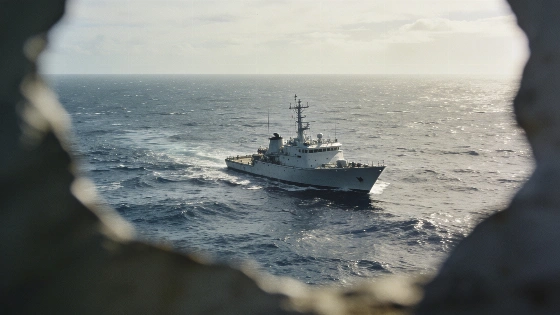
Between July and October 2024, a vessel from the Xiang Yang Hong research fleet spent time near three undersea cables linking the United States with Australia and Indonesia, as well as Singapore, Guam and other locations. The Center for Strategic and International Studies (CSIS) cites the vessel as an example of activity that could provide useful seafloor data. Its movements included repeated back-and-forth passes, a survey-like pattern distinct from simple transit. The CSIS Futures Lab published its vessel-tracking analysis on October 8, 2026, well after the activity took place.
The CSIS analysis compared 200 research vessels from 47 nations, including the United States and Russia. It found that Chinese vessels spent a significantly larger share of time near critical Pacific infrastructure than vessels from any other country, a difference that was statistically large. A separate part of the analysis described two Chinese research vessels following repeated survey-like tracks off Guam and in the western Pacific between February and May 2024, near the mapped routes of the Apricot and AAG telecommunications cables.
Why civilian surveys matter
The vessels are not part of the People's Liberation Army Navy. Civilian research platforms can collect information about the seafloor and surrounding environment, including geological data, that may be useful in military planning. The report warns that seafloor information gathered during civilian research could assist analysis of terrain for sabotage or submarine operations. The concern is a potential use of the data; the report does not establish that the ships collected it for either purpose.
Indo-Pacific Defense Forum described the activity as persistent and disproportionate. The ships followed a back-and-forth survey pattern associated with accurately mapping the seafloor, while civilian research vessels can give states plausible deniability when gathering information. CSIS characterizes these activities as gray-zone research, where civilian scientific work may also produce information with security value.
The analysis places the activity amid regional tensions. Beijing asserts claims in the South China Sea against countries including the Philippines and Vietnam, and maintains its claim over Taiwan, which it considers a breakaway province. Separately, The Telegraph reported 500 incidents of Russian monitoring near undersea cables over a five-year period. Iran has also threatened to attack cables in the Strait of Hormuz if the United States launches further assaults should conflict erupt again.