
AI upends insurance: from claims to customer care
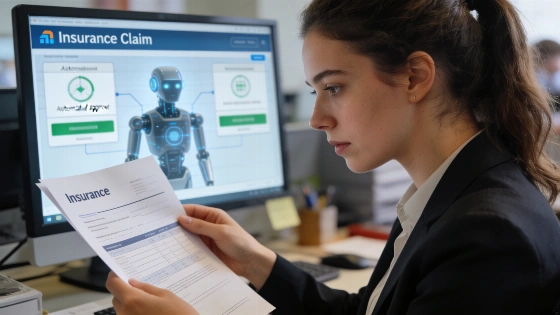
Paperwork used to slow insurance firms to a crawl. Not anymore. AI now sorts claims, pulls out contract details, and flags fraud faster than any human team. The old back-office bottleneck is disappearing. Generative AI and natural language tools are rebuilding admin work from the ground up. Mistakes drop. Speed goes up.
By 2026, 135 out of 193 major U.S. auto insurers had already deployed AI or machine learning in claims processing, with over half of claim assignment models operating without human intervention.
Customer service was always a weak link. That is changing. AI chatbots and sign-up assistants now talk in plain language and suggest policies in real time. Voice agents open claims the second a call or email arrives. Generative AI writes updates that are clear and personal, not cold and corporate. Service is now always on. It adapts to each customer.
AI does more than chat. In claims, computer vision scans photos of car dents or home damage. It spots the broken parts and creates instant repair quotes. Simple claims get paid out fast. Human adjusters can focus on tough cases. Advanced AI checks image data and pixel patterns to catch fake photos and recycled scams. That protects profits that fraud used to drain.
In December 2023, the National Association of Insurance Commissioners (NAIC) adopted a Model Bulletin requiring that AI-driven insurance decisions must not be inaccurate, arbitrary, capricious, or unfairly discriminatory, establishing a baseline for AI oversight in the U.S. insurance sector.
Still, many insurers are stuck in "pilot hell." They cannot scale AI beyond small tests. Old systems and data headaches block progress. ThinkUPC steps in here. The company offers integration that works with any tech, deep know-how, and a method to spot the best use cases and take them from idea to full rollout. They focus on tech independence, cost control, and data privacy. That matters, especially with strict EU rules.
AI is now the baseline. It is not a futuristic edge. Insurers who move now will cut costs, speed up service, and set new standards. Those who wait may not survive. The future belongs to those who turn AI's promise into real results. Some are already doing it. They are moving fast.
Regulators are watching closely. Since 2024, the New York Department of Financial Services (NYDFS) has required a three-step discrimination check, hard numbers like adverse impact ratios, and both pre-launch and ongoing tests for AI in underwriting and pricing. Insurers must file yearly attestations and report big changes to their AI. This treats AI as its own compliance area. A Legal 500 Intelligence review says these rules are changing how the industry handles oversight and transparency.
Automation is moving fast. But most settlement amounts are still "augmented" by AI, not fully automated. Out of 135 settlement models, 94 help humans decide. Only 30 run on their own, according to the 2026 State of Claims Automation report. Top vendors are also rolling out AI document tools that can cut search times by up to 90%. Insurance workflows are getting faster by the day.