
AI Raises the Value of Real-World Learning
Fred Swaniker says generative AI can make classroom learning more efficient while mentorship and practical experience remain essential to preparing people for work.
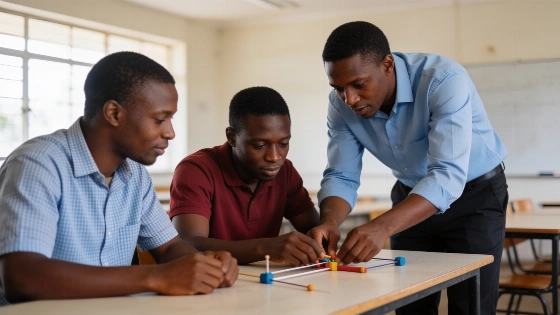
Research cited by Fred Swaniker puts traditional classroom learning at 10% of skill acquisition. Developmental relationships contribute 20%, while real-world experience accounts for 70%. Swaniker says the findings draw on cognitive experts, including the Center for Creative Leadership. The Center for Creative Leadership describes the 70-20-10 framework as a pattern found in research into how leaders develop: 70% through challenging assignments, 20% through developmental relationships and 10% through coursework and training. The figures work best as a guide to combining these channels, not as a universal measure of how every person learns, as the CCL framework explains.
That split shows the limits of what generative AI can do for education. Tools such as ChatGPT can make classroom learning more efficient, Swaniker argues, but they cannot provide the relationships or practical experience that make up the other parts of the model. UNESCO's 2023 guidance treats generative AI as a tool that can support teaching and learning, while stressing human responsibility for checking AI-generated content and preserving learners' autonomy.
Practice beyond the classroom
At African Leadership University (ALU), the learning model has centered on applying knowledge in the real world since the institution was founded in 2013. Swaniker says debates and peer learning matter, along with structured mentoring and coaching. The core is learning by doing. In the 70-20-10 framework, that means challenging assignments and practical work, not simply being present in a workplace. The quality of the experience matters.
For schools and employers, that means creating opportunities for people to test what they know in real situations. A learner's ability to perform well in a classroom does not show how effectively they can apply that knowledge outside it. Experience also gives people room to stumble, get back up and learn from actual outcomes. Mentoring, coaching and feedback can help learners reflect on those experiences, while formal courses remain one part of development.
AI is likely to make individual tasks easier to automate. Tools can generate art or music, while others can produce essays. Machine vision can detect skin cancer; it can also create a 3D map of a room. But real problems rarely fit within one function. UNESCO's 2023 Global Education Monitoring Report says technology should be judged by its relevance, equity, evidence and sustainability, and should not replace in-person, teacher-led instruction. The report found that 11 of 51 surveyed governments had AI curricula, while about half of countries had standards for developing teachers' ICT skills. It also reported that 54% of countries had identified the skills they want to develop for the future.
Connecting tools and purpose
As more tools target specific tasks, people who can connect systems and coordinate their functions may become more valuable. Swaniker argues that architectural and design thinking will matter because useful solutions often emerge where disciplines meet. He also expects new technology jobs that do not require intensive coding: AI tools may write code for separate functions, but people will still need to assemble those functions into a working whole.
That work depends on systems thinking. Knowing how individual tools perform is useful; understanding how they fit together is essential to producing a broader result. UNESCO's guidance on generative AI in education also emphasizes human oversight and the need to assess AI-generated material.
The purpose behind learning matters, too. AI can help with the "what," Swaniker argues, while learners need a reason to decide which problems deserve their effort. He points to climate change, poverty, infrastructure challenges and pandemics, as well as environmental destruction, injustice, energy challenges, food insecurity and the risk of another world war. AI alone cannot solve these problems.
ALU's approach starts with global problems and opportunities rather than a menu of academic subjects. The university gives students seven "grand challenges," such as healthcare or education, and seven "great opportunities" facing the world. Students choose a problem they want to address, declare a mission and shape their learning around it.










