Surface Laptop Ultra and RTX Spark get hands-on testing on Windows Central Podcast
Daniel Rubino and Zac Bowden discuss Surface Laptop Ultra battery and display results, then turn to RTX Spark gaming tests and local AI tools.
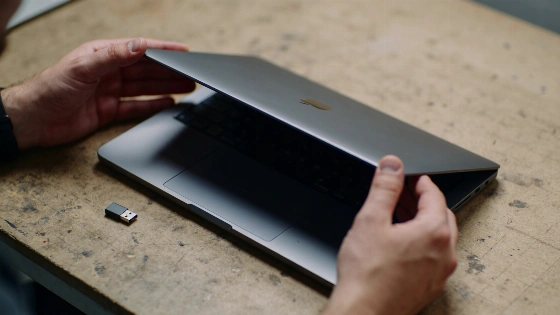
A PCIe SSD in the Surface Laptop Ultra reached 14,000 MB/s in the hosts' comparison, while the HP OmniBook Ultra 16 reached 10,000 MB/s. Read speeds on the ASUS drive varied. Microsoft lists removable SSD options for the Surface Laptop Ultra: 512 GB PCIe Gen 4 or 1 TB and 2 TB PCIe Gen 5.
Those results feature in Episode 407 of the Windows Central Podcast, where Daniel Rubino and Zac Bowden share impressions from hands-on testing. They discuss laptop performance, local AI and gaming. Microsoft's specifications identify the Surface Laptop Ultra as a 15-inch system built around NVIDIA RTX Spark N1X, with configurations offering an 18-core CPU and 5,120-core GPU or a 20-core CPU and 6,144-core GPU. Available unified LPDDR5x memory options range from 24 GB to 128 GB, according to Microsoft's technical specifications.
Display and battery trade-offs
The Surface Laptop Ultra's 2,000-nit Mini-LED display has 1,344 dimming zones. Its 3,270 × 2,180 resolution, 3:2 aspect ratio, refresh rate of up to 120 Hz and 100% DCI-P3 coverage round out the panel specifications. The hosts compare it with competing Tandem OLED panels, discussing ghosting and glossy reflections. Its 92 Wh battery delivered around 10-12 hours of light use. Standby endurance compared favorably with Apple Silicon devices. Microsoft rates battery life at up to 15 hours of local video playback and up to 12 hours of active web use.
There are practical design details, too. Zac describes a MacBook-inspired build with a haptic touchpad and strong speakers. He also points to efficient sleep battery performance and a magnetic breakaway USB-C connector. Microsoft lists the device at 4.41 pounds and 12.95 × 9.40 inches, with a thickness of about 0.71 inches without feet. Its connections include USB-C/USB4, HDMI 2.1b, USB-A, a full-size SD card reader and a 3.5-mm audio jack.
RTX Spark performance and local AI
Daniel discusses the 3.9-pound ASUS ProArt P16, which has dual-fan cooling and 4K anti-reflective touchscreen options. The HP OmniBook Ultra 16 has a rear tower exhaust and a Zero-Lattice Gen 2 keyboard. It also comes with a compact 140W GaN charger.
The hosts cover single-core and multi-threaded RTX Spark CPU benchmarks. For games such as Cyberpunk 2077, they discuss results with DLSS and frame generation, with performance approaching RTX 4070/5060 laptop levels. RTX Spark combines a Grace CPU and Blackwell RTX graphics in one platform with unified memory, rather than the conventional laptop setup of system RAM and separate GPU memory. NVIDIA lists 18-core and 20-core CPU variants and up to 128 GB of unified memory in its RTX Spark specifications.
Local AI experiments include Hermes Agent and local large language models. The hosts also describe Photoshop desktop automation and automatic folder cleanup. Configurable unified memory allocations let GPUs use shared system RAM to run larger local models. NVIDIA advertises up to 1 petaflop of FP4 AI performance for the platform. Microsoft positions the laptop for AI development with Blackwell graphics and access to the CUDA ecosystem, as described in its Surface IT Pro overview. The episode also raises risks to local data safety. Windows Recall and semantic search are described as missing or delayed on RTX Spark.
Handheld impressions and listener questions
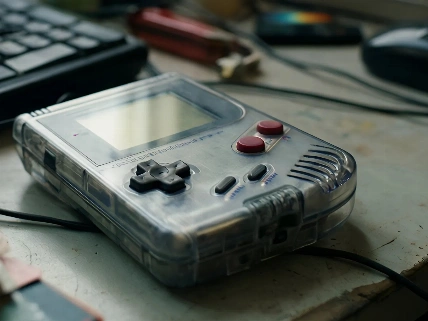
The ASUS ROG Xbox Ally X20 gets attention for its translucent chassis and 7.4-inch 120Hz anti-reflective OLED display. The hosts discuss its Z2 Extreme performance and use with XREAL AR glasses.
Audience questions cover boot and restart bugs, NVMe expansion, backlash over OneDrive and Microsoft 365 storage allocation, and the possibility of lower-tier RTX Spark silicon. Surfshark VPN sponsors the episode. Questions can be sent to podcast@windowscentral.com; the show is available on Spotify, Apple Podcasts, Pocket Casts and RSS, with the live, uncut video on the Windows Central YouTube channel.
Topics: