
India's students push generative AI past its limits
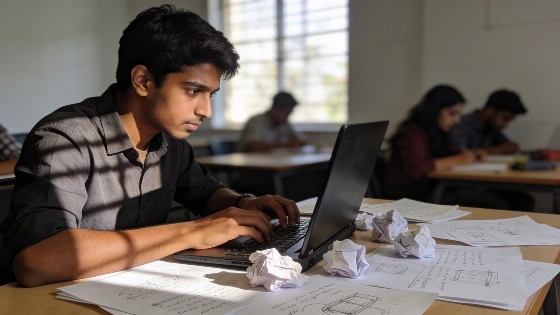
Sam Altman says India now has more than 100 million people using ChatGPT every week. That's not hype. It's a shift. Students, coders, and teachers across the country are not just asking questions-they're pushing the tool to do things its creators never planned. The old idea of instant genius doesn't hold up here. In India, the winners are the ones who try, fail, and try again. Fast.
A 2026 study analyzing over 200,000 ChatGPT conversations from emerging markets found that Indian users rely heavily on the platform for education, coding, and productivity, with usage patterns tracked from December 2022 to February 2026.
Iteration, not perfection
India stands out for how people use AI, not just how many use it. Ronnie Chatterji, OpenAI's Chief Economist, says Indian users ask three times more coding questions than the global average. They ask twice as many about education. People here are quick to repurpose tools. ChatGPT gets stretched and tested in ways OpenAI never saw coming. The company now calls India a top growth market. ET BrandEquity reports that ChatGPT's user base in India doubled in the last year, mostly for writing, communication, education, and search.
Generative AI didn't explode by chance. Electricity took 46 years to reach the masses. ChatGPT did it in 2.5. That's a leap. Why? Fast tech, fast sharing, and a tool built for constant change. Each new version-GPT-1, GPT-2, GPT-3, and now GPT-4-grew stronger. GPT-4 runs on 1.8 trillion parameters and 120 layers. It's powerful. It's everywhere.
OpenAI's professional and developer-facing tools, including Codex and ChatGPT Work, have also seen rapid expansion, with weekly users surpassing 35 million as of 2026. This growth highlights the increasing integration of AI into both educational and professional workflows in India.
Failure fuels creativity
India's AI story isn't just about clever hacks. It's about making failure normal. The old "right first time" mindset-born from six sigma and lean-doesn't fit here. AI lets you try, fix, and try again in seconds. The real leap is mental. Students, parents, and teachers need to see public failure as a sign of effort, not shame.
History backs this up. Picasso sketched Guernica up to 45 times. Hemingway wrote 47 endings for A Farewell to Arms. Today's students have even more powerful tools. But they only work if you're willing to fail, learn, and build on what didn't work.
Even big tech stumbles. Spotify's mobile app once crashed, leaving users unable to search or stream, as Nerds Magazine reported. The lesson? Adapt fast. Move on. Try again.
The new rule: prototype or fall behind
Generative AI isn't fading away. It's only getting stronger. For India's students, the only way forward is to build, test, and rebuild. Fail fast. Fail often. Don't trust the first answer. The future belongs to those who turn a hundred bad ideas into one good one. The age of perfection is over. Iteration is everything now.